※本ページはプロモーションが含まれます
Disclosure: This post contains affiliate links. If you buy through them, we may earn a commission at no additional cost to you. Learn more.
Short version: Dragon Ball Super Card Game Fusion World is the fastest to learn and by far the cheapest to play competitively, One Piece Card Game rewards resource-management depth but costs the most to keep up with, and Pokémon TCG has the deepest strategic layer and the biggest collector market — with an annual rotation that forces you to keep spending just to stay legal. None of the three is objectively “better.” They’re built for different kinds of players, and which one is right for you depends on whether you value fast games, deckbuilding depth, or long-term collectible value more.
This isn’t a beginner’s “here are the rules” rundown — if you want that for Fusion World specifically, we’ve got a full beginner’s guide already. This piece is for players who already know one of these three games and are trying to decide whether to add (or switch to) another, based on how the games actually play and what they actually cost — not marketing copy.
- How the Three Games Actually Play
- Which Game Has the Steepest Learning Curve?
- What It Really Costs to Get Competitive
- Rotation, Banlists, and the Cost of Staying Legal
- The Collector Market: Chase Cards and Ceiling Prices
- Competitive Scene and Tournament Support
- Which Game Fits Which Kind of Player
- FAQ
- The Takeaway
- Related Articles
- More Trading Card Game Guides
How the Three Games Actually Play
All three are Bandai- or Pokémon Company-designed TCGs built around a similar skeleton — a life/prize resource that depletes as you win, a resource system that fuels your plays, and a central “Leader” or win condition. But the layers on top of that skeleton are genuinely different in depth.
Dragon Ball Fusion World: Three Card Types, One Decision a Turn
Fusion World strips the format down to Leader, Battle, and Extra cards. You charge exactly one card to Energy per turn, Energy is colorless, and Battle Cards can attack the same turn they’re played — there’s no summoning sickness and no complex stack of triggered abilities to track. Life is both your win condition and a resource: you start with 8 Life cards, and losing them (or drawing your deck out) ends the game.
The upside is speed and clarity — a new player can follow what’s happening in a match within a session or two, and games rarely run long. The downside, and it’s a real one if you’re coming from a combo-heavy game, is a shallower combo ceiling. Competitive Fusion World rewards curve-outs and sequencing more than intricate chains of card interactions, and that can feel thin after a few months if you’re the type of player who lives for finding a broken interaction nobody else spotted.
One Piece Card Game: Five Card Types and a DON!! Economy
One Piece adds Character, Event, and Stage cards on top of Leader, plus a second resource layer — DON!! cards, which you split between attaching to boost a character’s power and holding “active” to pay for card effects. That extra layer of decision-making (how much DON!! to commit now versus later, when to trigger an Event at instant speed) is where One Piece earns its reputation as the more tactically demanding of the three anime TCGs. Community writeups commonly cite something like double the learning time of Fusion World before DON!! decisions start to feel intuitive, and that tracks with what most players report anecdotally.
The tradeoff: that depth comes with more fiddly bookkeeping at the table, and Bandai has had to actively patch degenerate DON!! interactions — the April 2026 banned/restricted update didn’t just ban individual cards like Charlotte Pudding (OP06-047), it banned a combination: Borsalino (EB04-058) can no longer be run in the same deck as I Re-Quasar Helllp!! (OP07-115), because that pairing created a loop where Borsalino kept getting revived to farm extra Life cards indefinitely. That’s the kind of interaction-heavy design that makes One Piece rewarding — and occasionally a balance headache.
Pokémon TCG: The Deepest Ruleset, By a Wide Margin
Pokémon is the outlier in complexity. On top of Pokémon, Trainer (Item/Supporter/Stadium), and Energy cards, you’re managing Evolution lines, a five-slot Bench, weakness/resistance math, retreat costs, Special Conditions, and a six-card Prize system where taking specific Prizes (not just “winning”) is often the actual game plan with ex/V-tier attackers. It’s the only one of the three where deck thinning and prize trade math are genuinely advanced skills separate from just knowing what your cards do.
That depth is a selling point for players who want a game with real long-term strategic ceiling. It’s also the steepest onboarding of the three — a brand-new player sitting across from a Pokémon veteran is at a much bigger disadvantage in game one than the same matchup would be in Fusion World.
Which Game Has the Steepest Learning Curve?
Ranked lowest to highest: Fusion World is the easiest to pick up and be playing reasonably well within a handful of sessions. One Piece sits in the middle — DON!! management and Event timing take real reps to internalize. Pokémon is the steepest, not because any single mechanic is hard, but because there are more interacting systems (evolution, energy types, prize trading, bench management) that all have to click together before you’re making good decisions turn to turn. If you’re introducing a genuinely new player to TCGs for the first time, Fusion World is the kindest on-ramp of the three.
What It Really Costs to Get Competitive
This is where the three games diverge the most, and it’s the part most “which TCG should I play” articles gloss over.
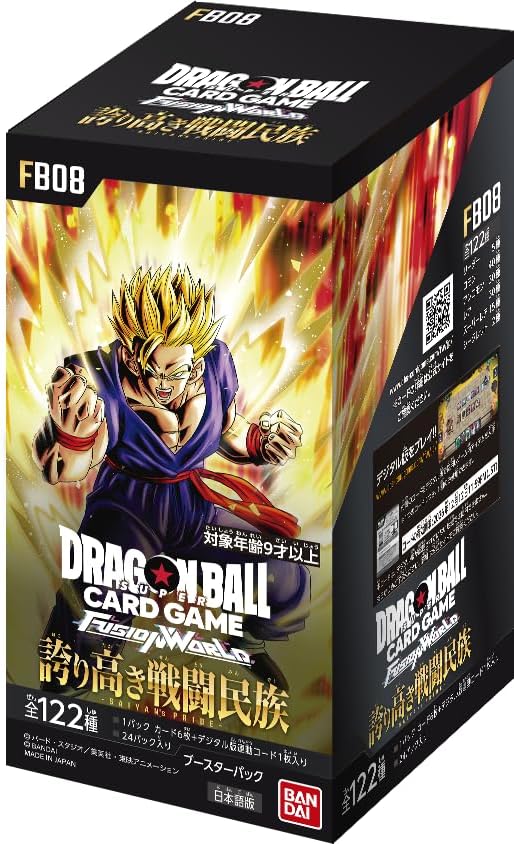
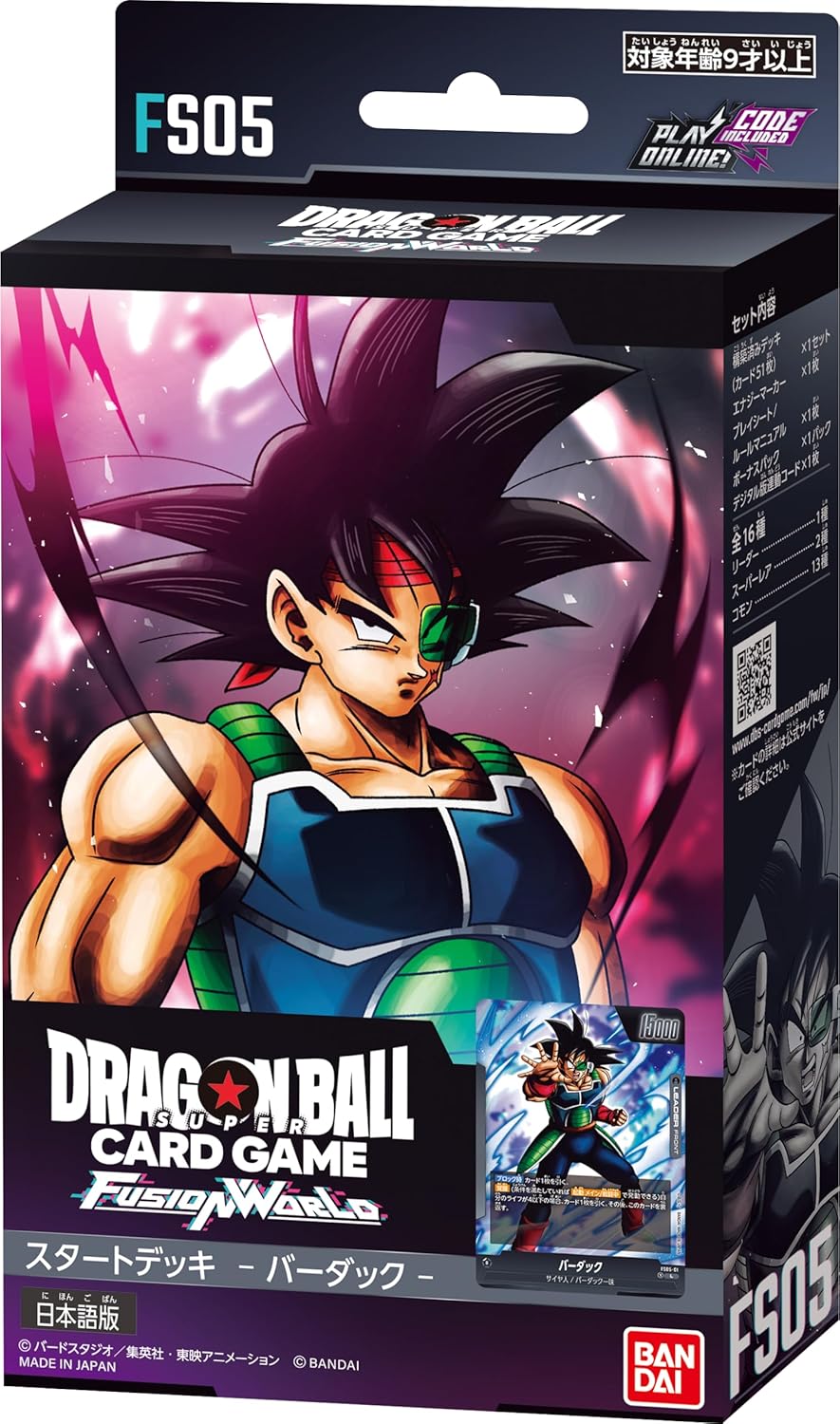
Dragon Ball Fusion World is the cheapest entry by a clear margin. A single-color starter deck runs about $15-20 and is tournament-legal out of the box. Booster boxes land in the $80-110 range depending on the set (Cross Force, FB10, ran closer to $100-130 at MSRP but traded well above that in the weeks after its June 2026 release). Chase Super Rares mostly sit in the $10-30 range, and a realistic budget to build a genuinely competitive deck from singles is around $150-300. FB08 “Saiyan’s Pride” — listed on Discovery Japan Mall under its literal Japan-to-English title “Proud Warrior Tribe” — is currently the newest Fusion World box that mall carries at roughly ¥12,375 (about $78 at August 2026 exchange rates), which is a fair snapshot of what a real, current Fusion World box actually costs before US retail markup. The catch: FB09 and FB10, the two newest sets, aren’t in that mall’s catalog yet, so if you specifically want the newest legal cards you’re shopping secondary-market pricing, not MSRP.

One Piece Card Game costs meaningfully more at every tier. English booster boxes MSRP around $120, individual packs are $4.99, and popular sets routinely sell 20-40% above MSRP during peak demand. Top “Manga Rare” chase singles — the game’s premium alt-art tier — run $300-600 and can clear $1,000+ for the most sought-after prints, which pushes a realistic competitive singles budget to $200-600 depending on the archetype. For a real example of current stock, Discovery Japan Mall carries the One Piece Card Game Twin Champions (OP-06) booster box at roughly ¥27,279 (about $170) — worth noting this mall’s One Piece catalog currently skews toward earlier 2024-era sets rather than the newest OP releases, so treat it as a representative price point rather than a “buy the newest set here” recommendation.

Pokémon TCG lands in between on paper — competitive decks are commonly estimated at $200-500, with budget Tier 2 archetypes buildable for $50-80 if you’re strategic about singles. But that number is deceptive, because Pokémon is the only one of the three that forces you to periodically rebuy: see the rotation section below. Discovery Japan Mall stocks recent Scarlet & Violet-era product like the Terastal Festival Ex Booster box at roughly ¥27,255 (about $170) for 10 packs, or a cheaper way in with the Ex Start Deck Flame Victini at around ¥5,500 (about $34) as a preconstructed starter.


| Game | Starter Deck | Booster Box (approx.) | Realistic Competitive Budget | Top Chase Single Range |
|---|---|---|---|---|
| Dragon Ball Fusion World | $15-20 | $80-110 (higher at launch) | $150-300 | $10-30 typical, low hundreds for hyped SCRs |
| One Piece Card Game | $15-25 | ~$120 MSRP, often 20-40% over | $200-600+ | $300-600, $1,000+ for top Manga Rares |
| Pokémon TCG | $17-20 | $130-235 depending on product | $200-500 ($50-80 budget) | $500-1,700+ for modern SIRs, millions for vintage grails |
Prices above are approximate as of August 2026 and move constantly with set releases, tournament results, and speculation — treat this table as a snapshot, not a quote, and none of it is financial advice.
Rotation, Banlists, and the Cost of Staying Legal
This is the single biggest long-term-cost difference between the three games, and it doesn’t show up in a “cost to start” comparison.
Pokémon TCG rotates. The 2026 Standard rotation went into effect April 10, 2026, and it was one of the largest in recent memory — six full sets rotated out at once, and cards carrying the “G” regulation mark stopped being tournament-legal. Before the rotation, the top four decks were built around Dragapult ex, Gardevoir ex, Charizard ex, and Gholdengo ex; after it, only Dragapult ex survived. That means players who’d invested in staples for the other three decks had to substantially rebuild, on a schedule set by Pokémon’s own release calendar, not by anything they did wrong.
One Piece Card Game does not rotate. Every legal set stays legal indefinitely; the format is managed entirely through a Banned & Restricted list, and as of the most recent April 2026 update there are no cards on the Restricted list at all — just a short banned list (Charlotte Pudding, Nami OP03-040, Gecko Moria OP06-086) plus the new Borsalino/I Re-Quasar banned pairing. Your old cards keep working.
Dragon Ball Fusion World also does not rotate. Every set from FB01 onward is still tournament-legal as of August 2026, and the format is likewise managed through a periodically updated banned/restricted list (most recently revised around July 2026). Combined with its lower singles prices, this is arguably Fusion World’s strongest long-term-value argument: nothing you buy today is guaranteed to become unplayable next spring because of a scheduled rotation.
The tradeoff for the two non-rotating games isn’t zero, though — a card can still get power-crept into irrelevance by newer releases even if it’s technically legal, and neither game’s banlist changes are predictable far in advance. But that’s a softer, slower kind of obsolescence than Pokémon’s hard annual cutoff.
The Collector Market: Chase Cards and Ceiling Prices
If you care about collecting value as much as (or more than) playing, this is where the three games look completely different.
Pokémon has the highest ceiling by a huge margin. In the modern era alone, Prismatic Evolutions’ Umbreon ex Special Illustration Rare trades around $1,000+ raw, and older alt-art chase cards like Evolving Skies’ “Moonbreon” (Umbreon VMAX Alt Art) sit around $1,790 raw with PSA 10 copies near $4,100. 2026’s Ascended Heroes set pushed chase cards like Mega Gengar ex SIR to roughly $960. And at the extreme vintage end, a PSA 10 Pikachu Illustrator sold for $16.49 million in a Logan Paul-driven sale in February 2026 — an outlier, not a market benchmark, but it illustrates how much bigger Pokémon’s collector ecosystem is than the other two games’.
One Piece has a smaller but still substantial collector tier. Manga Rare alt-arts are the chase tier, commonly $300-600 with the biggest names clearing $1,000+, and the game had its second consecutive quarter outselling a member of TCG’s traditional “Big Three” (surpassing Yu-Gi-Oh! in Q1 2026 sales value) — a sign the secondary market is genuinely active, not just hype.
Dragon Ball Fusion World’s collector market is real but still young. Secondary prices are generally lower across the board, and in Q1 2026 TCGplayer sales data, no Fusion World set cracked the top 5 bestselling releases and no Fusion World singles cracked the top 10 by GMV — even though the game as a whole jumped from #16 to #9 in overall sales ranking that quarter, its best three-month stretch in its roughly two-year lifespan. That’s a genuinely fast growth trajectory, but it also means Fusion World singles haven’t (yet) built the kind of deep, liquid secondary market Pokémon and One Piece have. The flip side: outlier ultra-premium alt-art Leaders from newer sets like Cross Force (FB10) have already sold for the equivalent of several hundred dollars in Japan, so the ceiling is rising — it’s just not there across the board the way Pokémon’s is.
Downside worth flagging for all three: high-value singles bought loose from unverified online sellers carry real counterfeit risk in every one of these games. Buy graded cards from established sellers or sealed product from reputable retailers if you’re spending real money on a chase card, and remember all of the price figures above move fast and aren’t financial advice.
Competitive Scene and Tournament Support
Pokémon has by far the largest infrastructure — a full Play! Pokémon League Cup/Challenge/Regional/International/Worlds ladder that’s run for over two decades, with huge prize pools and a genuinely global player base.
One Piece Card Game has built out a real competitive circuit faster than most anime TCGs manage — Regionals across North America, Europe, and Asia, a dedicated Championship series, and Limitless TCG tracking weekly tournament results the way a mature competitive game does.
Dragon Ball Fusion World is the newest infrastructure of the three but growing quickly — its Championship 2025-2026 Grand Finals (both paper and digital) were held in Los Angeles on April 19-20, 2026, alongside the broader Dragon Ball Games Battle Hour event, and Regional-equivalent events are expanding at local stores. It’s a smaller scene than the other two right now, with less publicly tracked competitive data — genuinely a downside if you want deep tournament-result research before building a deck, but also means less-established metas and more room to innovate if you’re an early adopter.
Which Game Fits Which Kind of Player
- Want the cheapest way into competitive anime-TCG play, with fast, easy-to-follow games? Fusion World. Lower buy-in, no rotation, and a rules set you can teach a friend in one sitting.
- Want the deepest tactical layer and don’t mind managing an extra resource system? One Piece. DON!! decisions and Event timing reward the kind of player who likes squeezing value out of every turn — just budget more for singles.
- Want the biggest, most liquid collector market and the deepest overall strategy game, and don’t mind rebuying staples on a schedule? Pokémon. It has the highest ceiling for both competitive depth and card value, but the annual Standard rotation is a real, recurring cost that the other two games simply don’t have.
- Already play one of the other two and want a lower-stress side game? Fusion World’s simplicity and low buy-in make it the easiest second game to pick up without a huge time or money commitment — see our guide to building a first competitive Fusion World deck if that’s the direction you’re leaning.
None of these are mutually exclusive, and plenty of collectors in 2026 play more than one — the entry cost for Fusion World in particular is low enough that “just try it” is a reasonable answer if you’re on the fence.
FAQ
Is Dragon Ball Fusion World cheaper to play competitively than Pokémon or One Piece?
Yes, generally. A competitive Fusion World deck typically runs $150-300 in singles, versus $200-500 for Pokémon (or as low as $50-80 for a budget Tier 2 archetype) and $200-600+ for One Piece, where top Manga Rares alone can clear $1,000. Fusion World’s booster boxes and starter decks are also the least expensive of the three at MSRP.
Which of the three has the steepest learning curve?
Pokémon, because of how many systems interact — Evolution lines, Energy types, Bench management, and Prize trading all have to click together. One Piece is next, mainly due to DON!! resource management. Fusion World is the fastest to learn, with most new players comfortable within a handful of sessions.
Does Dragon Ball Fusion World or One Piece Card Game rotate like Pokémon does?
No. Both Fusion World and One Piece run non-rotating formats managed by periodically updated banned/restricted lists — every legal set stays tournament-legal indefinitely. Pokémon rotates annually, and the April 2026 rotation removed six full sets from Standard play in one of the largest cuts in years.
Which game has the best collector market for card values?
Pokémon, by a wide margin — its modern Special Illustration Rares regularly trade in the $500-1,700+ range and vintage grails have sold for millions. One Piece has a smaller but genuinely active secondary market with Manga Rares in the hundreds to low thousands. Fusion World’s collector market is growing fast (it jumped from #16 to #9 in overall TCG sales ranking in Q1 2026) but is still the youngest and least liquid of the three.
Can I play more than one of these games without going broke?
Yes, especially if Fusion World is one of them — its low buy-in makes it realistic to run as a budget-friendly second (or third) game alongside Pokémon or One Piece rather than needing to commit fully to just one.
The Takeaway
There’s no universal “best” here — Fusion World wins on cost and simplicity, One Piece wins on tactical depth for the price, and Pokémon wins on strategic ceiling and collector market size, with an annual rotation tax attached. If budget and fast games matter most to you, start with Fusion World. If you want the deepest resource-management puzzle without Pokémon-level collector prices, One Piece is the pick. If you’re building a long-term collection and want the biggest secondary market to eventually cash out into, Pokémon remains the heavyweight — just budget for the rotation. Whichever you choose, buy sealed product from reputable retailers and treat any high-value single as a “verify before you buy” purchase, not an impulse buy.
Related Articles
- How to Sell Your Dragon Ball TCG Collection Safely
- Fusion World Evolve Explained: Rules and Real Risks
- Dragon Ball Super Card Game: Original vs. Fusion World
More Trading Card Game Guides
- One Piece Card Game vs. Pokemon vs. Dragon Ball TCG (2026) (One Piece Card Game)
- 2026 Pokémon TCG World Championships Preview (Pokémon TCG)
Comments