※本ページはプロモーションが含まれます
Disclosure: This post contains affiliate links. If you buy through them, we may earn a commission at no additional cost to you. Learn more.
If you’ve got a shoebox of cards from the original Dragon Ball Super Card Game — the one with the BT- and TB-prefixed numbers, not Fusion World’s FB- cards — the chase cards worth actually knowing about are the five God Rares (BT18, BT21, BT22, BT23, and the original Realm of the Gods SSB Vegeta), plus a handful of Signature Rares and event-exclusive promos that still move for real money on the secondary market as of August 2026. None of it plays in Fusion World, and none of it is a retirement plan, but a surprising amount of it still has genuine collector demand almost a decade after the game launched.
- What “Original” Means Here, and Why It’s Not Dead
- The God Rare Tier: Five Cards That Define the Chase
- Beyond God Rare: Signature Rares and Event Promos Worth Knowing
- Original Dragon Ball Super Card Game Chase Card Reference
- Why Some of This Still Has Nostalgia Value
- What to Actually Buy If You Want In on the Nostalgia Right Now
- Frequently Asked Questions
- Takeaway
- Related Articles
- More Trading Card Game Guides
What “Original” Means Here, and Why It’s Not Dead
The original Dragon Ball Super Card Game launched in Japan in July 2017 with BT1 “Galactic Battle” and ran continuously through more than 20 mainline booster sets before BANDAI rebranded it “Dragon Ball Super Card Game Masters” in 2024 when Fusion World launched as a separate, from-scratch game. Masters didn’t stop — it’s still receiving new sets (most recently UB04 “Impact Beyond Dimensions,” with a 9th Anniversary set, “Chromatic Ascension,” slated for November 2026) — but “the original card game” in collector conversations almost always means the 2014-2023 window: everything from BT1 through the Zenkai Series sets (BT18 onward, which started September 2022 and reworked deckbuilding around Z-Cards).
That distinction matters for buying, because the secondary market treats early-era cards (BT1 through roughly BT12) very differently from Zenkai-era cards (BT18-BT27ish). Early cards are cheap and plentiful — a lot of the game’s print run happened before anyone knew it would last — while the Zenkai era introduced the God Rare rarity and tighter print windows that actually created lasting scarcity. If you’re digging through an old collection, knowing which half of the timeline you’re holding changes what’s worth grading versus what’s a nostalgia keepsake.
We cover the mechanical differences between this game and the current one in more depth in our Original vs. Fusion World comparison — this piece focuses specifically on what old cards are actually worth and why.
The God Rare Tier: Five Cards That Define the Chase
God Rare (GDR) is the rarest standard rarity the original game ever printed, sitting above Special Rare (SPR) and Secret Rare, with an estimated pull rate cited by collectors around one per two-to-three booster cases — not one per box. Only five were ever released under that name, making the God Rare list a genuinely short, checkable want-list rather than a sprawling chase.
- SSB Vegeta, Unbridled Power (Unison Warrior Series BOOST -Realm of the Gods-, set code B16, 2021) — the first God Rare ever printed, reportedly hitting over $2,500 shortly after release. As the originator of the rarity, it carries a first-of-kind premium collectors chase independent of the card’s in-game power level.
- Bardock, Origin of the Legend (BT18-148, “Dawn of the Z-Legends,” 2022) — the rarest pull from BT18 and a perennial want-list card for Saiyan-lore collectors given Bardock’s status as Goku’s father.
- Son Goku, Peace Resolution (BT21-148, “Wild Resurgence,” 2023) — the third God Rare, a green-color Battle Card whose skill boosts Leader power when it’s revealed from the Z-Deck.
- SS Gogeta, Fusion Reborn (BT22-140, “Critical Blow,” 2023) — the fourth God Rare, tied to one of the franchise’s most popular fusion characters, which helps demand stay steady even outside DBS-collector circles.
- Ultra Instinct Son Goku, State of the Gods (BT23-140, “Perfect Combination,” 2023) — the fifth and, so far, final God Rare, with listed retail asks north of $2,000 as of recent tracking. Treat that figure as an ambitious ask rather than a guaranteed sale price — sold comps for God Rares swing wildly by condition and by how hot the character is that month.
The obvious caveat: because so few of these exist and they get talked about constantly in “most valuable DBS cards” listicles, asking prices online are frequently inflated well above what cards actually sell for. Cross-check any God Rare listing against recent sold listings (eBay’s sold-and-completed filter, or a price-tracking site) rather than trusting a single seller’s asking price — this is a genre where BIN prices and real market value can be a mile apart.
Beyond God Rare: Signature Rares and Event Promos Worth Knowing
God Rares get the headlines, but two other categories move real money in the original game’s secondary market:
Signature Rares — cards printed with an alternate art treatment resembling an autograph overlay — are a Tournament of Power / Assault of the Saiyans-era staple. Examples like Son Goku, Hope of Universe 7 (TB1-052) and Meteoric Energy SSB Vegito (BT7-118) have traded in roughly the $200-$400 range in recent tracking, with tournament-stamped variants (cards physically stamped at an event) commanding more than their unstamped counterparts of the same print.
Event-exclusive promos are the sleeper category most new collectors miss entirely. The Origins 2019 gold-stamped Anniversary Box exclusives — Saiyan Cabba, Objection, and Flying Nimbus — were only obtainable at a single physical event, and Cabba in particular has been tracked around $500 despite having almost no competitive relevance whatsoever. That’s the clearest illustration in the whole game of scarcity mattering more than playability for long-term value: nobody is running that Cabba in a deck, but almost nobody has one to sell either.
There’s also a genuine oddity worth flagging for anyone chasing hologram/parallel variants specifically: SS3 Son Goku, Universe at Stake (BT20-095, “Power Absorbed”) is a Super Rare on paper, but its hologram-foil parallel print was tracked at roughly $1,900 in December 2023 — treated by collectors as functionally as rare as a God Rare despite the lower rarity label on the card itself. It’s a good reminder that stated rarity tier and actual scarcity don’t always match in this game; some parallel prints from specific sets slipped through with far smaller print runs than the base rarity would suggest.
Original Dragon Ball Super Card Game Chase Card Reference
| Card | Set / Code | Rarity | Approx. Price (Aug 2026) |
|---|---|---|---|
| SSB Vegeta, Unbridled Power | Realm of the Gods (B16), 2021 | God Rare | $2,000-$2,500+ |
| Bardock, Origin of the Legend | Dawn of the Z-Legends (BT18-148), 2022 | God Rare | $500-$1,500+ (grade-dependent) |
| Son Goku, Peace Resolution | Wild Resurgence (BT21-148), 2023 | God Rare | $400-$1,000+ (grade-dependent) |
| SS Gogeta, Fusion Reborn | Critical Blow (BT22-140), 2023 | God Rare | $500-$1,200+ (grade-dependent) |
| Ultra Instinct Son Goku, State of the Gods | Perfect Combination (BT23-140), 2023 | God Rare | $800-$2,000+ (asking prices skew high) |
| SS3 Son Goku, Universe at Stake (hologram) | Power Absorbed (BT20-095) | SR (hologram parallel) | ~$1,900 as of Dec. 2023 |
| Saiyan Cabba (gold-stamped) | Origins 2019 Anniversary Box promo | Event exclusive | ~$500 |
| Meteoric Energy SSB Vegito | Assault of the Saiyans (BT7-118) | Signature Rare | ~$300-$415 |
| Broly, The Rampaging Horror | Galactic Battle (BT1-073) | SPR | $10-$15 loose, ungraded |
Prices above are approximate, sourced from a mix of recent sold-listing tracking and dealer asking prices as of August 2026, and will move. This is not financial advice — the original game is out of print, so its secondary market runs on collector sentiment and character popularity, not competitive relevance, and a single reprint announcement or influencer video can move a price meaningfully in either direction.
Why Some of This Still Has Nostalgia Value
The honest reason to care about any of this in 2026 isn’t investment upside — it’s that the original Dragon Ball Super Card Game was a lot of players’ first real anime TCG, running from 2017 through the Zenkai Series era right up until Fusion World took over the marketing spotlight. For players who grew up on that seven-year run, God Rares and Signature Rares aren’t just rare cardboard; they’re tied to specific Regional/Nationals memories, box-break streams, and the era before the game had to compete with One Piece Card Game and Fusion World for shelf space. That’s the same dynamic that keeps old Pokémon Base Set and vintage Yu-Gi-Oh! cards desirable decades later — character nostalgia plus hard scarcity is a durable combination even once the competitive relevance is gone.
The downside is liquidity. Because Masters organized play support varies a lot by region now, and because BANDAI’s active marketing push is squarely behind Fusion World, the buyer pool for original-game singles is smaller and slower than it is for anything currently on shelves. A God Rare can sit listed for weeks waiting for the right buyer in a way a hot new Fusion World Secret Rare typically doesn’t. If you’re buying for nostalgia, that’s fine — you’re not trying to flip it next month. If you’re buying speculatively, budget for a much longer hold than you would for current product.
What to Actually Buy If You Want In on the Nostalgia Right Now
Here’s the catch worth being upfront about: the mall we partner with for real, ships-from-Japan product (Discovery Japan Mall) currently stocks Fusion World exclusively — none of the original Masters-era boxes (BT1 through BT27-ish) show up in their live Dragon Ball inventory as of this writing. That’s a real availability gap for anyone specifically hunting original-series sealed product, so if you want an actual BT18 “Dawn of the Z-Legends” or BT23 “Perfect Combination” booster box to crack for a shot at a God Rare, you’re better served by a singles/sealed specialist (TCGplayer, a dedicated DBS card shop, or eBay with seller feedback vetted first) than by this particular affiliate mall.
What Discovery Japan Mall does stock, if you’d rather scratch the nostalgia itch through characters instead of rarities, are Fusion World products built around the same legacy characters chasing these old God Rares references:
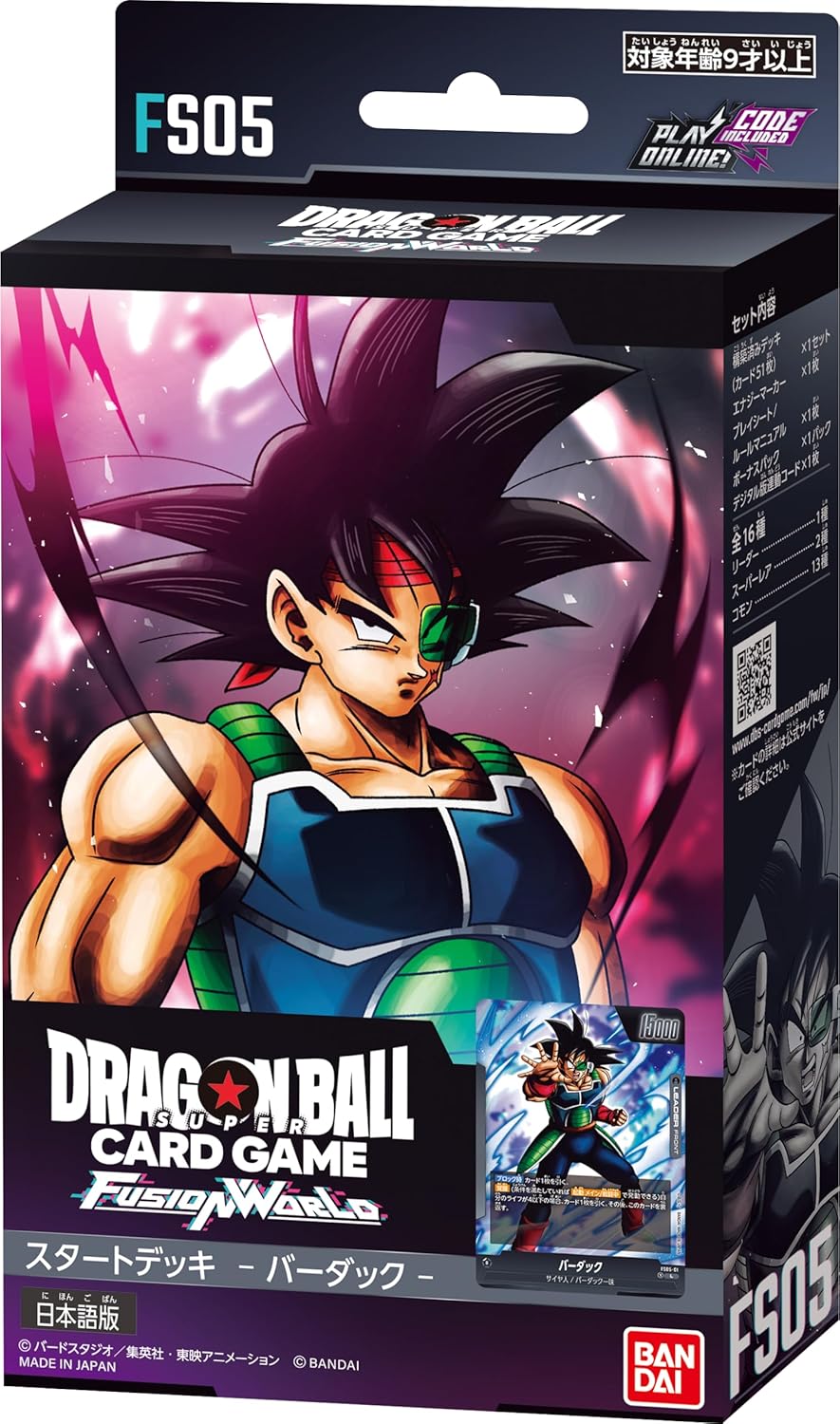
- Start Deck Bardock (FS05) — a budget-friendly, currently in-print preconstructed deck built around Bardock, the same character behind the BT18 God Rare above, if you want a modern, playable card featuring him rather than chasing a $500+ original-print original.

- Booster Pack Looming Threat (FB06) Booster Box — a good general entry point if the chase-card research above has you more interested in trying the currently active game than in hunting seven-year-old singles.

Both ship as genuine Japanese product, which is worth noting if you specifically want English card text for casual play — see our PSA vs. BGS vs. CGC grading guide if you’re weighing whether an old God Rare pull (or a new Fusion World one) is worth submitting for grading.
Frequently Asked Questions
Are original Dragon Ball Super Card Game cards worth anything in 2026?
Some are, meaningfully so. The five official God Rares and select Signature Rares/event promos trade for hundreds to low thousands of dollars depending on grade and demand, while the vast majority of commons, uncommons, and even most Super Rares from the game’s run are worth a few dollars at most. Rarity tier alone doesn’t guarantee value — character popularity and print-run scarcity matter as much as the printed rarity label.
What’s the rarest rarity in the original Dragon Ball Super Card Game?
God Rare (GDR), introduced in 2021 with SSB Vegeta from “Realm of the Gods.” Only five were ever printed under that name, with an estimated pull rate around one per two-to-three booster cases — making it far scarcer than Special Rare (SPR) or Secret Rare, the tiers most sets treat as their normal chase pull.
Can I still play the original Dragon Ball Super Card Game competitively?
Yes, under its current name “Dragon Ball Super Card Game Masters.” It’s still actively supported with new sets and a Championship season, but local store support varies a lot by region now that attention is split with Fusion World, so check with your local game store before assuming there’s a weekly Masters night waiting for you.
Where’s the safest place to buy or sell original-series singles?
For original Masters-era singles and sealed product specifically, TCGplayer (with seller ratings checked) or a dedicated card shop is generally more reliable than general marketplaces, since this JP-import affiliate mall we otherwise recommend for current Fusion World product doesn’t stock original-series boxes. Always check seller feedback and, for anything above roughly $100, ask for extra photos of the exact card before paying — counterfeit risk rises with a card’s price and with how out-of-print it is.
Should I get old God Rares graded?
If the card is a genuine God Rare or a notable Signature Rare/event promo and it’s in strong centering and surface condition, grading (PSA, BGS, or CGC) can meaningfully increase resale value and buyer trust, since it removes condition disputes for a seven-plus-year-old card. It’s not worth the fee and turnaround time for commons, uncommons, or lower-value Super Rares — grading costs can exceed the card’s raw value at that tier.
Takeaway
The original Dragon Ball Super Card Game’s chase-card list is short and checkable: five God Rares, a small set of Signature Rares and event-exclusive promos, and a handful of parallel-print oddities like the BT20-095 hologram that outpunch their printed rarity. Values are real but modest by modern TCG standards, liquidity is slower than for current product, and this genuinely isn’t a place to put money expecting fast returns — it’s a place to reconnect with cards that meant something during the game’s 2017-2023 run. If you want to actually play with legacy characters today rather than hunt seven-year-old singles, Fusion World’s current sets are the more accessible, better-stocked way in.
Related Articles
- Dragon Ball Super Card Game: Original vs. Fusion World
- How to Store Dragon Ball Super Card Game Cards Properly
- Dragon Ball Fusion World Chase Card Price History (2024-2026)
More Trading Card Game Guides
- One Piece Card Game vs. Pokemon vs. Dragon Ball TCG (2026) (One Piece Card Game)
- Pokémon TCG Pitch Black: Best Pulls & Chase Cards (Pokémon TCG)
- Naruto CCG Retrospective: BANDAI’s Original Card Game (2006-2013) (Naruto Card Game)
Comments