※本ページはプロモーションが含まれます
Disclosure: This post contains affiliate links. If you buy through them, we may earn a commission at no additional cost to you. Learn more.
Dragon Ball Super Card Game Fusion World has five deck colors — Red, Blue, Green, Yellow, and Black — and each one plays like a genuinely different game. Red rushes you down before you can set up, Blue makes you pay twice for every card you play, Green turns a big Energy turn into a haymaker, Yellow locks your board down one Rest effect at a time, and Black snowballs off Energy Markers once it gets rolling. If you’re picking your first Leader, the color matters more than the character on the box art.
This isn’t a tier list — colors trade places in the competitive standings every few sets, and picking the “best” color right now is a bad long-term strategy anyway, since you’ll be playing this color identity for months. Instead, here’s what each color actually does at the table, with real cards and sets to back it up, so you can pick the one that matches how you like to play.
- How Color Works in Fusion World (Quick Refresher)
- Red: The Aggressor
- Blue: The Tactician
- Green: The Destroyer
- Yellow: The Controller
- Black: The Disruptor
- Does Fusion World Have Two-Color (Dual-Color) Decks?
- Color-to-Set Cheat Sheet
- Where to Actually Buy Into a Color
- Frequently Asked Questions
- Takeaway
- Related Articles
- More Trading Card Game Guides
How Color Works in Fusion World (Quick Refresher)
Every deck is built around exactly one Leader card, and that Leader has a printed color. Per the official rule set, “if your Leader doesn’t have a certain color, you can’t include a card with that color in your deck” — so your Leader’s color is a hard filter on your entire 50-60 card deck, not just a suggestion. Energy is the one colorless exception: any card in your hand can be charged face-down into your Energy Area regardless of color, and it pays for costs the same way no matter what color card you’re playing.
Fusion World launched with four colors (Red, Blue, Green, Yellow) when FB01 “Awakened Pulse” released in Japan in February 2024. Black joined the roster with FB03 “Roar of Rage” that August, and it made an immediate splash — dragonball.gg’s early meta coverage of that set called Black “the only [color] with highly competitive leaders” heading into the following set, thanks to strong Energy Marker payoffs like Cell (FB03-061).

Red: The Aggressor
Red is built to close games before your opponent gets to play their deck. It leans on cheap, efficient Battle Cards, straightforward Power-reduction effects, and “Critical”-style combat tricks that let a smaller card punch through a bigger one. Original Red Leader Son Goku is widely recommended as the best entry point for total beginners specifically because its effects are easy to read at a glance — no rules glossary required to understand what a card does.
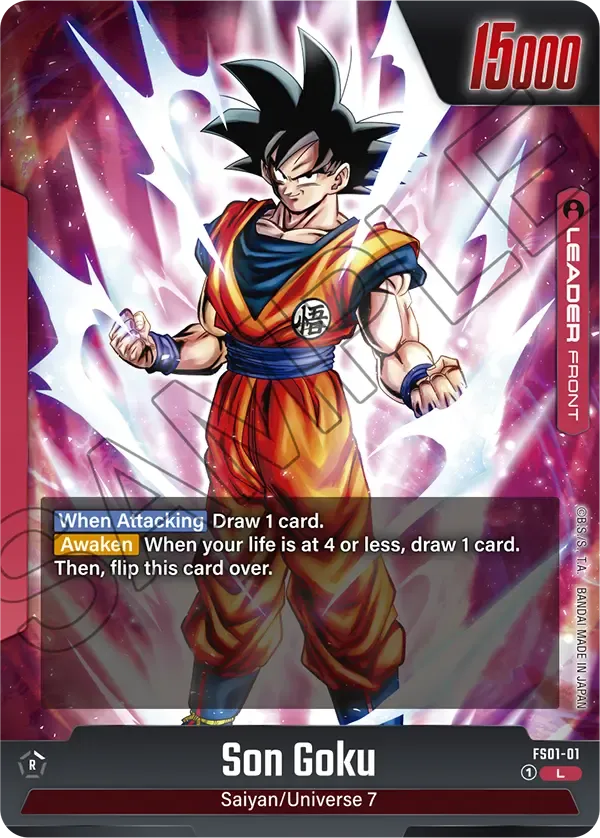
The catch: Red runs out of steam. Once your opening rush stalls out, Red decks generally don’t have the resource depth to grind through a slower deck’s late game, and a well-built Blue or Yellow deck that survives the first few turns can turn the tempo advantage right back around.
Blue: The Tactician
Blue is Fusion World’s control/tempo color. Instead of removing cards outright, Blue specializes in bouncing an opponent’s Battle Card back to their hand and manipulating Energy, forcing them to spend a full turn (and a card) re-deploying something they already played once. The original Blue starter, Vegeta, is built around a real tradeoff: several of its best effects only activate when your hand size is low, so a skilled Blue player is constantly weighing “do I hold this card for options, or play it now to unlock my Leader’s power?”
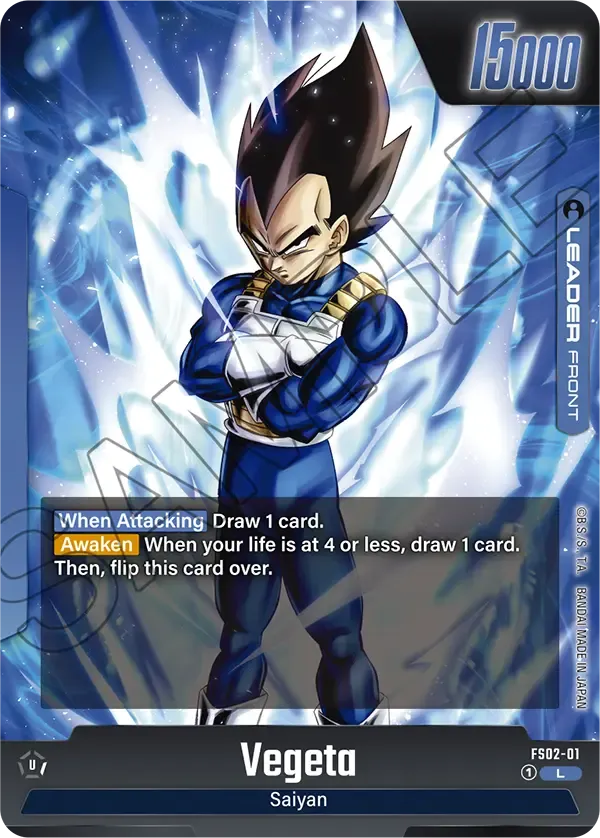
That tradeoff is also Blue’s biggest weakness for newer players — its conditional effects can feel clunky or simply not turn on if you don’t manage your hand correctly, and the color has a noticeably higher skill ceiling than Red. Blue rewards experience more than it rewards a strong opening hand.
Green: The Destroyer
Green’s identity is Energy overcharge into a single explosive turn, backed up by discard and KO effects that grind down an opponent’s resources over a longer game. The original Green Leader, Broly, is the clearest example — it channels extra Energy into big bursts of Power rather than spreading effects across the board, so Green games often hinge on one or two enormous attacks rather than steady incremental pressure.
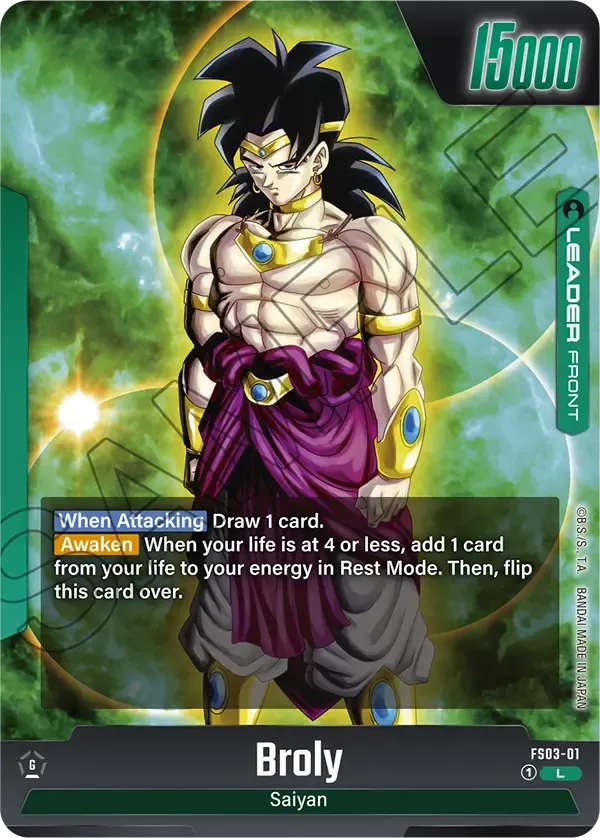
The downside is speed: Green needs time to set up its Energy engine, and if it can’t establish board control early, its removal-and-discard plan simply doesn’t have anything to point at yet. Against a fast Red deck specifically, Green can find itself dead before its engine turns on.
Yellow: The Controller
Yellow denies opponents actions rather than removing their cards outright. Its signature move is putting an opponent’s Battle Card into Rest Mode so it can’t attack or block on their next turn, combined with a flexible resource engine that lets Yellow adapt its plan turn to turn. The original Yellow starter, Frieza, plays this exact game — board control through denial rather than raw combat stats.
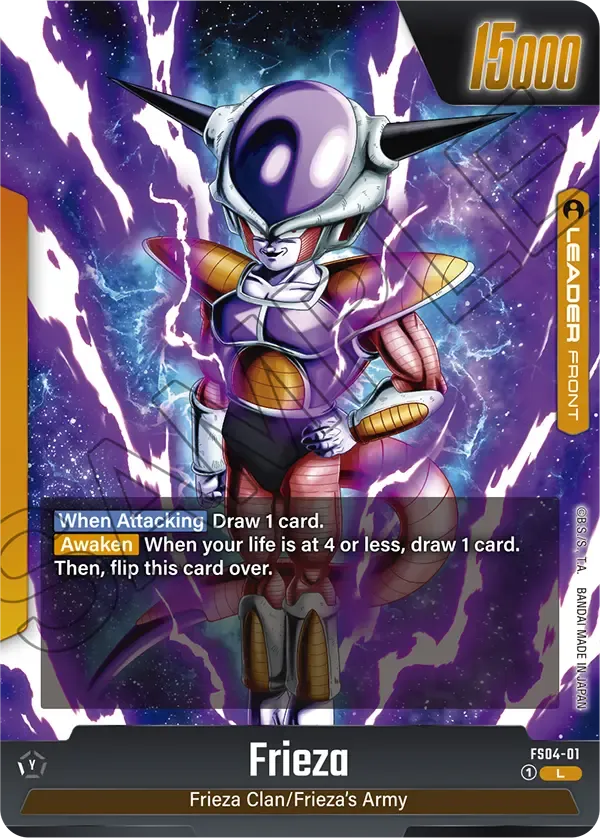
Yellow’s flexibility is a double-edged sword. New players sometimes find Yellow’s decision tree overwhelming compared to Red’s straightforward “attack with the bigger number” logic, and Yellow decks that don’t commit to a clear game plan can spread their resources too thin to close out a game they’ve otherwise controlled.
Black: The Disruptor
Black is the newest of the five colors, introduced in FB03 “Roar of Rage” (August 2024), and it built its identity around Energy Markers — a resource placed under cards that Black skills consume or generate to accelerate its plays and chain disruption effects. Cell (FB03-061) was one of the set’s headline Energy Marker payoffs, and Black cards have continued to appear as strong pulls in later sets — King Piccolo’s alt-art Super Rare from FB06 “Rivals Clash” is a good example of the color staying relevant well past its debut set.

Black has the steepest learning curve of the five colors by a clear margin. Its power comes from precise sequencing — knowing exactly when a Marker needs to be placed versus spent — and a misplay there costs you a full turn’s value in a way that a misplay in Red usually doesn’t. It’s also worth flagging as a caveat: Black’s early reputation as a top-tier color in FB03 made some of its chase cards spike in price at the time, and colors that dominate hard right out of the gate are also the ones BANDAI’s banned/restricted list tends to circle back to first. Don’t buy into a color purely because it topped a tier list the month it released.
Does Fusion World Have Two-Color (Dual-Color) Decks?
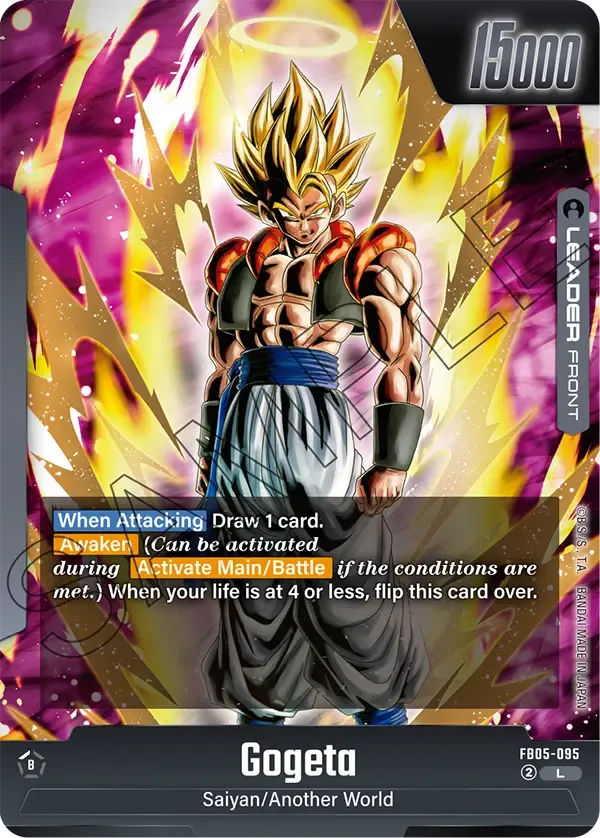
Short answer: no, not in the way some other TCGs work. Every standard Leader in Fusion World prints a single color, and your deck can only include cards matching that one color — there’s currently no Magic-style multicolor deckbuilding rule and no confirmed plan from BANDAI to add one. What sometimes gets mistaken for “dual-color” is actually the Fusion/Evolve mechanic: characters like Gogeta (a Leader introduced in FB05 “New Adventure”) and Vegito (also playable as a Leader, prominently featured in FB10 “Cross Force”) represent two characters fused into one card, but that Leader still has a single fixed color — Fusion is a character-lore gimmick layered onto the existing five-color system, not a new deckbuilding rule that lets you mix colors.

Color-to-Set Cheat Sheet
| Color | Playstyle in one line | Example Leader | Debut / Key Set |
|---|---|---|---|
| Red | Fast aggression, cheap threats, Power reduction | Son Goku | FB01 “Awakened Pulse” (Feb 2024) |
| Blue | Bounce + hand-size tempo control | Vegeta | FB01 “Awakened Pulse” (Feb 2024) |
| Green | Energy-burst Power spikes, discard/KO grind | Broly | FB01 “Awakened Pulse” (Feb 2024) |
| Yellow | Rest-based board denial, flexible engine | Frieza | FB01 “Awakened Pulse” (Feb 2024) |
| Black | Energy Marker snowball, disruption chains | Cell | FB03 “Roar of Rage” (Aug 2024) |
Approximate booster box prices (Japanese print, as of August 2026, subject to change): FB03 “Roar of Rage” runs about 10,183 JPY (roughly $68-70 depending on exchange rate), while newer sets like FB07 “Wish for Shenron” run closer to 15,872 JPY. This is not financial advice — sealed product pricing moves with each new release and any banned/restricted list update, so treat these as rough, dated reference points rather than guarantees.
Where to Actually Buy Into a Color
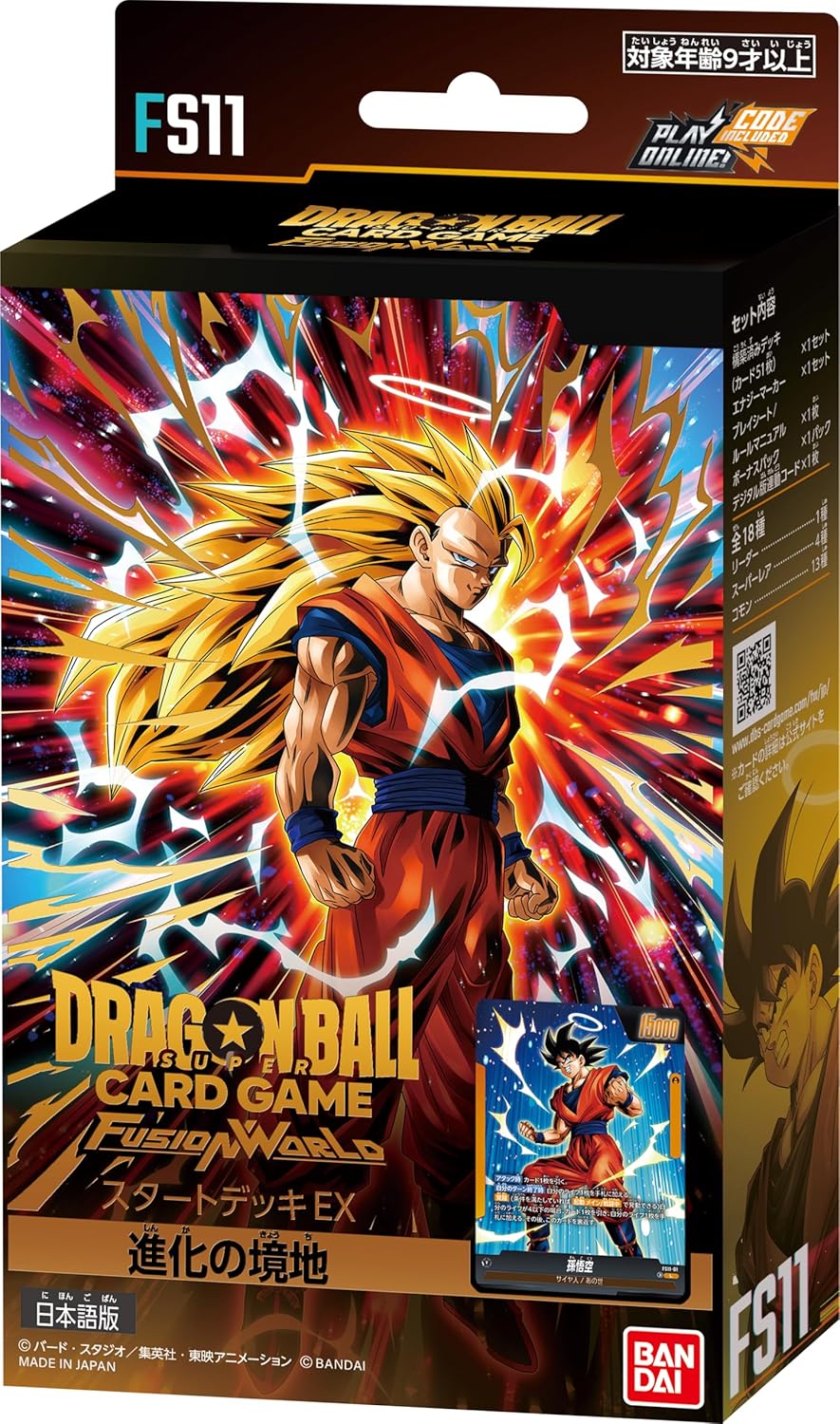
If you want to try a color risk-free before committing to a booster box, the cheapest way in is a single-color starter deck. This mall’s current stock tops out with the Start Deck Bardock (FS05), a preconstructed 51-card deck that’s a solid, cheap way to learn one color’s fundamentals with real tournament-legal cards instead of proxies (older FS01-FS04 single-character starters for Goku, Vegeta, Broly, and Frieza specifically are largely out of print at this point, so a newer starter or booster box is the more realistic buy-in today).

For chasing specific color payoffs, Booster Pack Roar of Rage (FB03) Booster Box is the literal set where Black debuted, making it a fun (if no longer meta-relevant) pickup if you specifically want early Black cards for a collection.

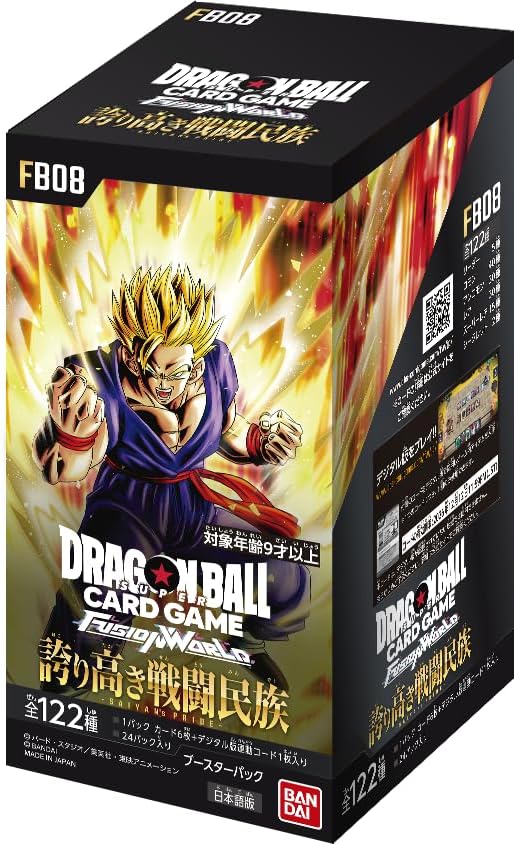
For a mix of newer Red, Blue, Green, Yellow, and Black cards from the current-ish competitive window, Booster Pack Saiyan’s Pride (FB08) Booster Box — listed on this mall under its literal-translation title “Proud Warrior Tribe” — is a better bet, since it’s the same all-Saiyan-Leader set BANDAI released internationally as “Saiyan’s Pride” in December 2025 and still sees standard-format play across multiple colors.

Caveat that applies to all of the above: everything this mall ships is genuine Japanese print — the game’s Power, Cost, and Color icons are numeric and color-coded so they read fine regardless of language, but Skill text (the actual card abilities that define each color’s strategy) will only be in Japanese. If you want to read every ability in English out of the box, look for English-print product at a US-based retailer instead; if you’re fine cross-referencing BANDAI’s own online card search tool for translations, Japanese print is a legitimate and often cheaper way in.
Frequently Asked Questions
Which Fusion World color is best for a total beginner?
Red is the most commonly recommended starting color because its effects are direct and easy to read — you generally don’t need to memorize a chain of conditional triggers to understand what a Red card does. That said, “best for beginners” isn’t the same as “strongest,” and plenty of experienced players prefer Blue or Yellow’s higher skill ceiling once they’re comfortable with the basic turn structure.
Can I mix two colors in one Fusion World deck?
No. Every deck must match its Leader’s single printed color, and there’s no official multicolor deckbuilding rule in Fusion World as of August 2026. Energy is the only colorless element — any card, regardless of its own color, can be charged into your Energy Area to pay costs.
Is Black overpowered compared to the other four colors?
It was considered one of the strongest colors right when it launched in FB03 “Roar of Rage” (August 2024), largely due to standout Energy Marker payoffs. Since then, the meta has shifted with every new set, and BANDAI periodically updates its banned/restricted list, so treat any single color’s “best color” reputation as a snapshot in time rather than a permanent ranking.
Do I need to buy singles to try a specific color, or can I start with sealed product?
Either works, but sealed product (a starter deck or booster box) is the safer starting point for a beginner. Loose singles bought from unverified online marketplace sellers carry a real counterfeit risk, especially for high-value Super Rare or Secret Rare cards, whereas sealed decks and boxes from an established retailer are much lower-risk.
Does a color’s identity change much between sets, or does Red always play the same way?
The core identity is stable — Red has stayed the aggressive color and Yellow has stayed the control color across every set from FB01 through FB10 — but the specific tools each color gets, and how strong those tools are relative to the other four colors, shifts with every new booster set and banlist update. A color that’s dominant in one set’s format isn’t guaranteed to stay that way two sets later.
Takeaway
Fusion World’s five colors are genuinely different games wearing the same rulebook: Red wants to end things fast, Blue wants to out-tempo you, Green wants one big swing, Yellow wants to lock you out of options, and Black wants to snowball off Energy Markers once its engine turns on. None of them is a wrong choice — the honest advice is to pick based on which playstyle actually sounds fun to you, since you’ll be living with that identity through several booster sets’ worth of new tools. If you’re still unsure, a cheap starter deck is a far better way to test-drive a color than a full booster box, and once you’ve settled on one, our Fusion World Beginner’s Guide covers the actual rules, set timeline, and where the meta stands going into FB11.
Related Articles
- Dragon Ball Fusion World Pull Rates Explained (2026)
- Dragon Ball Fusion World Digital vs. Paper: Which to Play
- Fusion World Evolve Explained: Rules and Real Risks
More Trading Card Game Guides
- One Piece Card Game Colors Explained: A Beginner’s Guide (One Piece Card Game)
- Which Naruto TCG Should You Start With in 2026? (Naruto Card Game)
- Booster Box vs. Singles: Which Wins in Pokémon TCG? (Pokémon TCG)
Comments