※本ページはプロモーションが含まれます
Disclosure: This post contains affiliate links. If you buy through them, we may earn a commission at no additional cost to you. Learn more.
Short answer: Bandai does not publish official per-box pull-rate percentages for physical Dragon Ball Super Card Game Fusion World booster boxes, and the “SPR” rarity a lot of players ask about doesn’t even exist in this game — that’s a Masters-era (the older DBS card game) term. What Fusion World actually has is Common, Uncommon, Rare, Super Rare (SR), and Secret Rare (SCR), and the closest thing to an official odds statement comes from Bandai’s own digital app, not the cardboard boxes on a store shelf. If you’re trying to decide whether cracking a box is worth it statistically, the honest answer is “it depends heavily on which set, and mostly on luck” — here’s the actual math and where the real uncertainty lives.
- Fusion World’s Rarity Ladder (and Why “SPR” Is the Wrong Word)
- What Retailers Show You Isn’t the Pull Rate — It’s the Set List
- So What Are the Actual Odds? The Honest Answer
- Chase Card Math: When the Box Math Actually Worked
- Is a Fusion World Booster Box Worth It Statistically?
- Where to Actually Buy Sealed Fusion World Product
- Frequently Asked Questions
- Takeaway
- Related Articles
- More Trading Card Game Guides
Fusion World’s Rarity Ladder (and Why “SPR” Is the Wrong Word)
If you’ve played the older Dragon Ball Super Card Game (“Masters,” which still runs its own Zenkai Series in parallel) or another Bandai TCG, you might expect to see SPR (Special Rare) on a Fusion World pack. You won’t. Fusion World’s rarity scale runs:
- L (Leader) — one per deck, not something you pull randomly from packs you’d play with (Leaders do appear in booster packs as pulls, but your deck’s starting Leader is usually bought separately or from a starter deck)
- C (Common)
- UC (Uncommon)
- R (Rare)
- SR (Super Rare)
- SCR (Secret Rare) — the top rarity, with a standard version and, in most recent sets, a “Super Alt-Art” version of the same card
That’s it. No GDR, no SPR — both of those are Masters-only terms, and it’s an easy mix-up if you’re cross-shopping listings that lump the two games together. Alt-Art versions of Leaders, SR, and SCR cards also exist as separate pulls layered on top of the base rarity, which matters for the math below.
What Retailers Show You Isn’t the Pull Rate — It’s the Set List
Almost every booster box listing you’ll find online — Amazon, TCGplayer, local game store sites — displays something like this for a modern Fusion World set:
| Rarity | Card Types in Set (FB09/FB10) |
|---|---|
| Leader (L) | 5 |
| Common (C) | 40 |
| Uncommon (UC) | 35 |
| Rare (R) | 25 |
| Super Rare (SR) | 15 |
| Secret Rare (SCR) | 3 |
| Total | 123 types (plus Alt-Art/Super Alt-Art parallels, counted separately) |
This is real data, but it’s frequently misread. That table is the total number of unique card designs Bandai printed at each rarity for the whole set — not how many of each rarity you’ll physically pull from one box. A box has 24 packs of 12 cards each (288 cards total), and the print run obviously includes many more physical copies of, say, the 40 unique Commons than the 3 unique Secret Rares. Conflating “3 SCR types exist” with “you’ll pull 3 SCRs” is the single most common misunderstanding new buyers have about this game’s odds.
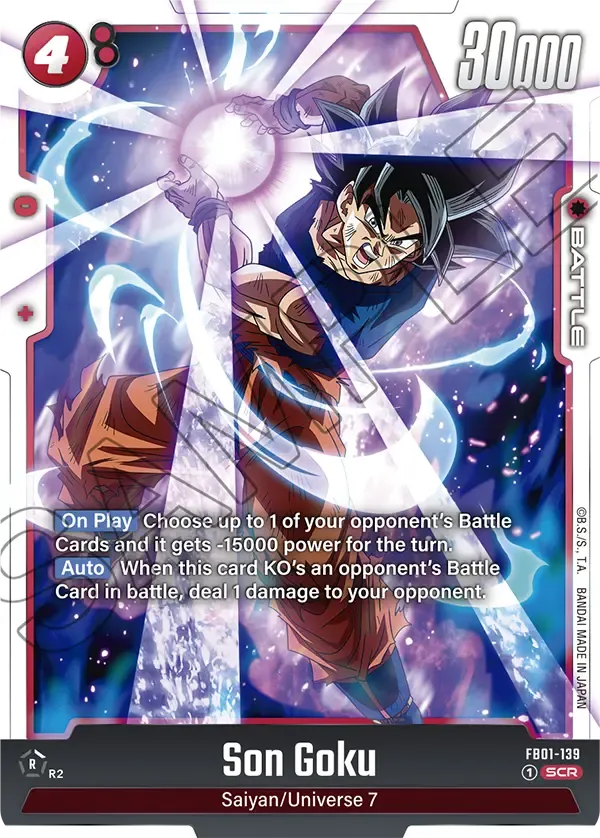
For comparison, go back to FB01 “Awakened Pulse” (Feb 2024, the launch set) and the ratio was even tighter: roughly 140 total unique cards across 8 Leaders, 52 Commons, 36 Uncommons, 30 Rares, 12 SRs, and just 2 Secret Rares (Goku and Vegeta). Modern sets like FB09 “Dual Evolution” and FB10 “Cross Force” widened that top-end pool slightly to 15 SRs and 3 SCRs, plus Alt-Art and Super Alt-Art versions of the SCRs — which sounds like better odds, but it also means your chase-card equity is now split across more targets instead of concentrated in one or two designs.
So What Are the Actual Odds? The Honest Answer
Here’s the part most articles gloss over: Bandai has never published an official per-box or per-pack rarity guarantee for physical Fusion World boosters. Compare that to Pokemon TCG, which discloses print-run pull-rate sheets, or even Fusion World’s own digital app — where Bandai’s producer team confirmed in an official Q&A that buying 10 digital packs at once guarantees at least one SR-or-higher pull. That digital-app number is the closest thing to an official statement Bandai has made about Fusion World odds, and while the company has said digital packs are built to mirror physical rarity ratios, it is not a confirmed, audited number for the cardboard product — treat it as a reasonable proxy, not gospel.
Extrapolating loosely from that 1-in-10 digital benchmark, a 24-pack physical box should land in the neighborhood of at least two to three SR-or-better hits at a bare minimum, with real-world box breaks reported by collectors often running a bit higher, and Secret Rare pulls remaining the genuine long-shot — some full boxes come up with zero SCR, others hit two. Community-compiled “unofficial” pull-rate trackers exist for this game (and for the older Masters game), but by their own admission they’re crowd-sourced estimates from box-break logs, not verified manufacturer data. Treat any specific percentage you see quoted online, including estimates in this article, as an approximation, not a guarantee.
Chase Card Math: When the Box Math Actually Worked
The best real-world case study for “was the box worth it” is FB01 “Awakened Pulse” itself. It launched at roughly an $85 MSRP per box. As of recent secondary-market tracking, sealed FB01 boxes have traded in the $300-$330 range — a 3.5x-to-4x markup — driven almost entirely by the fact that the set had only two Secret Rares (Goku and Vegeta), both of which became format-defining chase cards. Collectors who pulled that Goku/Vegeta SCR pair in a single box could recoup the box price and then some from those two cards alone.
That’s the case for buying boxes. Here’s the case against it: FB01 is a survivorship-bias story. It’s the one set collectors talk about specifically because it worked out. Plenty of other Fusion World sets — FB03 “Raging Roar,” for instance — have far more modest chase-card ceilings, and their box prices reflect that; FB03 boxes currently sell closer to $70-$90, near or even under original MSRP, because none of that set’s Super Rares or Secret Rares broke out as meta staples or high-demand alt arts. Buying a box today is a bet on both (1) pulling something valuable and (2) that card staying relevant or desirable after the fact — and neither is guaranteed. None of this is financial advice; card and box prices for this game move fast around new releases and banned/restricted list updates, and past chase-card breakouts like FB01’s don’t repeat on a schedule.
Is a Fusion World Booster Box Worth It Statistically?
If you’re buying purely for expected value, the math generally does not favor booster boxes over buying singles directly for a specific deck. A box runs $70-$130+ depending on the set (older sets are cheaper, current sets like FB10 have launched closer to $130-$275 depending on retailer and demand spikes), and most of what you crack will be Commons, Uncommons, and Rares you can get for a few cents to a couple dollars each as singles. You’re paying a premium for the chance at a Secret Rare or a strong Super Rare, not a guarantee of one.
Where box-buying makes more sense:
– You want the full pack-opening experience and treat any hits as a bonus, not the goal
– You’re trying to build a full playset of a specific color and boxes actually work out cheaper per-card than piecing together singles (true for some budget older sets, not for hyped current ones)
– You specifically want Alt-Art or Super Alt-Art versions for display and are fine with the gamble
Where it doesn’t:
– You need one specific competitive SR or SCR — buying that single card directly is almost always cheaper and removes variance entirely
– You’re buying multiple boxes as a pure investment hoping for an FB01-style outcome — that’s speculation on a collectibles market, not a repeatable strategy
Where to Actually Buy Sealed Fusion World Product
Since this mall ships genuine Japanese-print Fusion World boxes worldwide, here’s what’s currently in stock there (as of August 2026) if you want to test this math yourself:
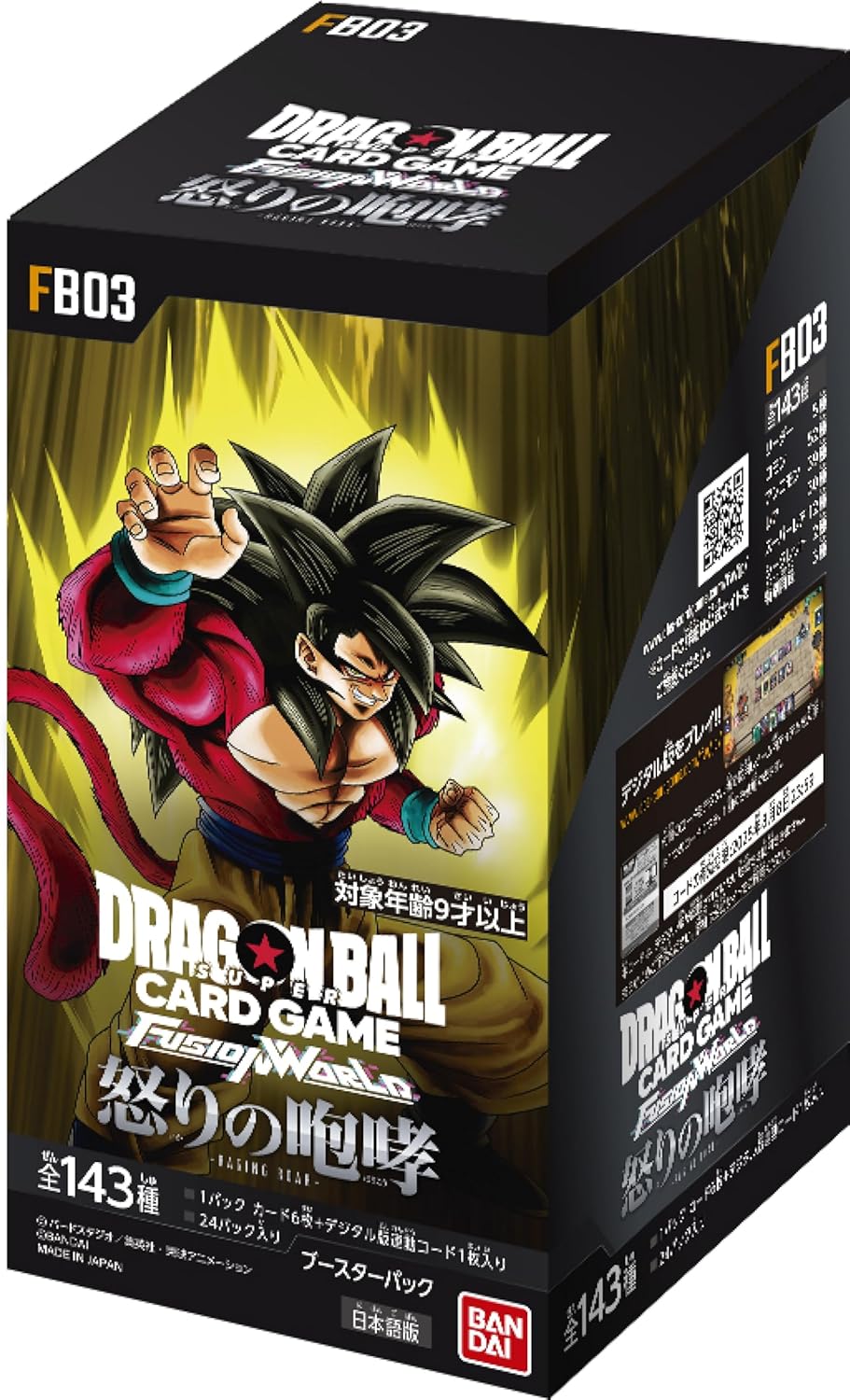
- Roar of Rage Booster Box (FB03) — the budget option discussed above. Good pick if you want to learn box-opening odds cheaply without much chase-card pressure; just don’t expect the SRs to be tournament-relevant today.

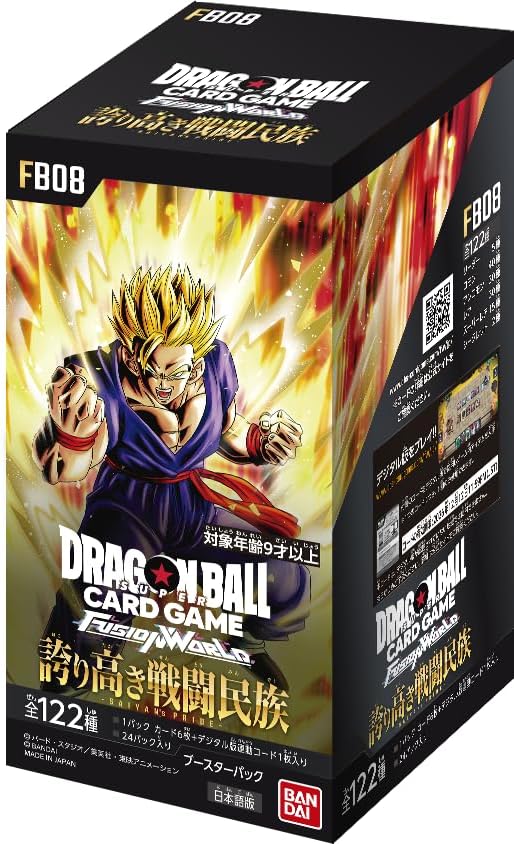
- Saiyan’s Pride Booster Box (FB08) — listed on this mall under its literal Japanese-to-English title “Proud Warrior Tribe,” this is the same all-Saiyan-Leader set Bandai released in English as “Saiyan’s Pride” in December 2025. A more current option with a fresher card pool than FB03.

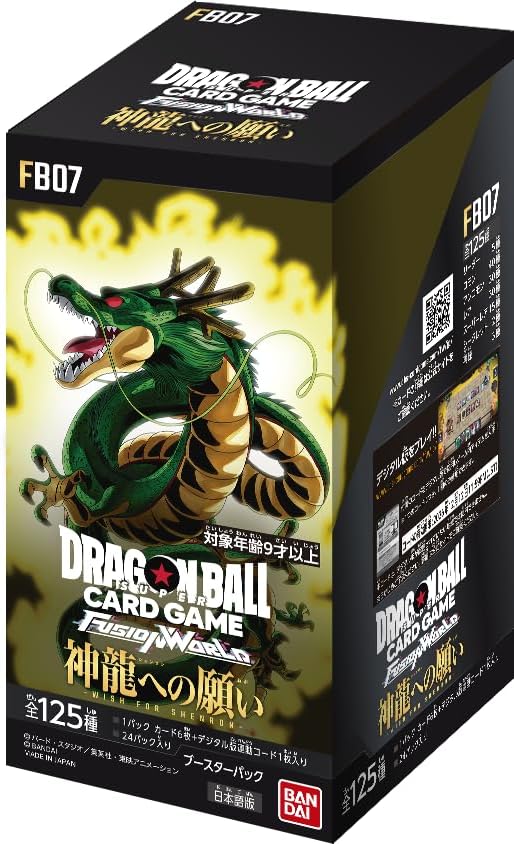
- Wish for Shenron Booster Box (FB07) — one set older than FB08, mid-price, another reasonable option if FB08 stock runs out.
If you’re brand new to the game and want the rules and buying basics before you dive into odds, our Dragon Ball Fusion World Beginner’s Guide covers starter decks, colors, and where the meta stands.
Caveat that applies to all three: this is genuine Japanese-print product — card text is in Japanese, though Power/Cost/Color icons are numeric and color-coded, so they’re readable regardless of language. If you want English card text for competitive deckbuilding, verify a listing is explicitly English-print before buying, or expect to cross-reference Bandai’s official card database. Also worth flagging: as of this writing, this mall’s Fusion World inventory tops out at FB08 — the two newest sets, FB09 “Dual Evolution” and FB10 “Cross Force,” aren’t currently showing in stock there, so check a US singles/box retailer directly if you specifically want the newest chase cards.
Frequently Asked Questions
Does Fusion World have an SPR rarity?
No. SPR (Special Rare) is a rarity from the older Dragon Ball Super Card Game Masters, not Fusion World. Fusion World’s rarities are Common, Uncommon, Rare, Super Rare (SR), and Secret Rare (SCR), with Alt-Art and Super Alt-Art parallel versions of higher-rarity cards. If a listing uses “SPR” for a Fusion World product, double-check it isn’t actually a Masters-era card mislabeled.
Does Bandai publish official pull rates for Fusion World boxes?
Not for physical product. The only official rarity-guarantee statement Bandai has made publicly is for the digital app, where buying 10 packs at once guarantees at least one SR-or-higher card. There’s no equivalent published guarantee sheet for physical boosters, so any specific percentage you see online (including estimates in this article) is a community-derived approximation, not manufacturer data.
Why do some booster box listings show exact rarity counts, like “15 Super Rare, 3 Secret Rare”?
That’s the total number of unique card designs printed in the set at each rarity, not the number of physical cards of that rarity you’ll pull from one box. It’s genuinely useful for knowing the size of the chase-card pool, but it isn’t a pull-rate guarantee.
Are booster boxes a good investment?
Treat that question with real skepticism. A handful of early sets (FB01 “Awakened Pulse” being the standout example) saw huge box-price appreciation because their chase cards became format staples and the SCR pool was tiny. Most sets don’t repeat that outcome. Card and box prices fluctuate, this isn’t financial advice, and buying sealed product specifically to flip it later is a speculative bet, not a reliable strategy.
What’s the safest way to buy sealed Fusion World product?
Buy from established retailers or reputable import shops rather than unverified marketplace listings, and check whether you’re buying an unopened, factory-sealed box versus a repackaged or “resealed” one — box tampering and counterfeit singles are both real risks in this hobby, especially for high-value Secret Rare cards bought loose.
Takeaway
Fusion World’s pull-rate conversation gets muddled because the numbers most people see — those tidy “X Common, Y Rare, Z Secret Rare” tables — describe the set’s card pool, not what a box statistically hands you. Bandai has never published an official physical pull-rate sheet, the closest official number is a digital-app guarantee that’s a proxy at best, and the one big “boxes paid off” story in this game’s history (FB01) is the exception collectors remember specifically because it’s not the norm. If you’re buying to play, prioritize singles for what you actually need. If you’re buying boxes for the experience or a specific set’s chase pool, budget for it as entertainment spending with a shot at upside — not a guaranteed return.
Related Articles
- Dragon Ball Fusion World Colors Explained: Which to Pick
- Fusion World Evolve Explained: Rules and Real Risks
- Dragon Ball Super Card Game: Original vs. Fusion World
More Trading Card Game Guides
- Pokémon TCG Pull Rates Explained: Odds vs. Reality (Pokémon TCG)
- One Piece Card Game Pull Rates: Are Boxes Worth It? (One Piece Card Game)
- NARUTO CARD GAME Mechanics Explained: The July 29 Reveal (Naruto Card Game)
Comments