※本ページはプロモーションが含まれます
Disclosure: This post contains affiliate links. If you buy through them, we may earn a commission at no additional cost to you. Learn more.
The fastest way to build a competitive-viable Dragon Ball Super Card Game Fusion World deck isn’t picking a favorite character — it’s picking a color, matching your curve to 50 cards with a peak around 2-4 energy, and running your core pieces at three or four copies instead of spreading yourself thin across singles. A starter deck gives you a legal, functional chassis on day one; from there, boosters and trades fill in the gaps until your deck can actually compete. Here’s the process, step by step, using the current FB10 “Cross Force” meta as a working example.
- Step 1: Pick Your Color Before You Pick a Character
- Step 2: Know the Construction Rules Before You Buy a Single Card
- Step 3: Build Around a Curve, Not a Card Count
- Case Study: What a Real Competitive Curve Looks Like (Vegito, FB10)
- Should You Splash a Second Color for More Good Cards?
- Starter Deck as Your Chassis: What to Actually Buy
- Comparison: What Each Product Actually Gets You
- Frequently Asked Questions
- Takeaway
- Related Articles
- More Trading Card Game Guides
Step 1: Pick Your Color Before You Pick a Character
Every Fusion World Leader card has a color (Red, Blue, Green, Yellow, or Black), and that color decides your deck’s entire game plan more than any single card you’re chasing. FB10 “Cross Force,” released June 12-13, 2026, is a good snapshot of how differently each color plays: Son Goku (Red) leans into fast Ki-fueled aggression, Vegito (Blue) runs a card-advantage Evolve engine, Son Gohan: Childhood (Green) plays an efficiency-based value game, Boujack (Yellow) is a low-cost aggressive build, and Cell (Black) is the set’s first villain Leader built around the same Evolve mechanic as Vegito, played from a more disruptive angle.


That five-color split holds up across the whole card pool, not just FB10:
- Red rewards straightforward, easy-to-read effects and generally wants to attack now rather than set up.
- Blue plays a tempo and combo-piece game, often trading hand size for a bigger late-game swing.
- Green leans on Energy manipulation and board pressure over multiple turns.
- Yellow is the control color — removal, board answers, and grinding out resources.
- Black was added to the color wheel after Fusion World’s initial launch and plays a disruptive, resource-denial game.
Pick based on how you actually like to play, not which Leader looks coolest in art. A player who wants to make decisions every turn is happier in Blue or Yellow; a player who wants to know their win condition on turn one is happier in Red.
Step 2: Know the Construction Rules Before You Buy a Single Card
This part trips up players coming from other TCGs. Per BANDAI’s official rules, a Fusion World deck is 50-60 cards (most competitive lists run exactly 50 for consistency) plus one Leader, and you can run up to four copies of any card sharing the same card number. Critically, every card in your main deck must share at least one color with your Leader — there is no splashing a second color the way Magic: The Gathering or Pokémon (via basic Energy in newer formats) sometimes allow. If your Leader isn’t Blue, you cannot run a Blue card, full stop, even in the game’s “Extra Card” slot, which is a separate card type with its own Cost and Skill but still has to match your Leader’s color.
That’s a real constraint worth knowing going in: it means your deck-building decisions all happen inside one color’s card pool, which is smaller than a multicolor deck’s options would be. The upside is that mono-color consistency is part of why Fusion World games move faster than a lot of rival TCGs — you’re never stuck holding a card you can’t cast because you didn’t draw the right second color.
Step 3: Build Around a Curve, Not a Card Count
New deck builders tend to ask “how many creatures/attackers do I need?” The better question is “what does my curve look like at 1, 2, 3, 4, and 5+ energy?” Fusion World’s Energy system charges exactly one card per turn, so by turn 4 you have four Energy to spend — a deck that’s top-heavy with 5-6 cost cards will consistently be doing nothing on turns two and three while the opponent is already attacking.
A rough, color-agnostic skeleton that scales across most competitive-leaning FB10-era decks looks like this:
- 12-15 early plays (1-2 energy): cheap Battle Cards that do something on entry — a small stat boost, a draw, an Energy charge — rather than just being a body. These are your turns 1-2 and your Evolve/combo bases if your color uses that mechanic.
- 10-14 mid-curve engine pieces (2-4 energy): this is where most of your deck’s actual plan lives — your Evolve payoffs, your synergy pieces, your best rate-for-cost attackers. Run your true core pieces (the cards your deck can’t function without) at 3-4 copies; a 2-of core piece just isn’t consistent enough to build a whole game plan around.
- 8-10 combo/answer cards: held in hand and played during Battle to boost your Leader’s Power or answer an opposing attacker via the Blocker skill, rather than committed to the board turn one.
- A handful of top-end (5+ energy) finishers: kept thin on purpose. Cards this expensive compete directly with the Energy you need for your mid-curve engine, so most competitive lists run very few of them.
The specific mix shifts by color and archetype, but the discipline is the same everywhere: know your curve peak before you know your exact 50 cards.
Case Study: What a Real Competitive Curve Looks Like (Vegito, FB10)
Since FB10 launched, Vegito’s Blue Evolve deck has been one of the clearest examples of this framework in action, and it’s backed by actual results — a Vegito list (card FB10-040) took down Ultimate Battle 2026 Vol. 3, one of BANDAI’s official promo-tournament series. The deck’s public breakdowns follow the curve-first approach closely: 12-15 cheap Evolve-base cards up front (valued for on-play effects over raw stats), 10-14 Evolve payoff pieces run at 3-4 copies each once a chain is committed to, roughly 8-10 Extra Cards used as a removal and answer toolkit, and a curve that intentionally peaks at 2-4 energy rather than stretching to expensive standalone threats.

The honest downside of that plan: Vegito’s whole deck is built around evolving a cheap base card into something bigger, and if the opponent removes that base before the Evolve trigger goes off, the Energy already invested in it is gone. Aggressive Red decks and wide-board strategies that can remove the base before turn 4-5 are a genuinely bad matchup for it. That’s a useful lesson beyond just this one deck — any engine built around protecting a specific card is only as good as your plan for when that card gets answered.
Should You Splash a Second Color for More Good Cards?
No — and this is worth calling out explicitly because it’s the single most common question new deck builders ask when they’re used to other TCGs. Fusion World’s construction rules lock every card in your deck (including Extra Cards) to your Leader’s color(s); there’s no mana-base or Energy-type workaround like there is in Magic or Pokémon. If a card you love is a different color than your Leader, the only way to play it is to build (or switch to) a Leader that shares that color. This is actually a beginner-friendly rule in disguise: it means you never have to solve a “should I splash” math problem, and every card in a legal decklist is guaranteed to fit your deck’s color identity.
Starter Deck as Your Chassis: What to Actually Buy
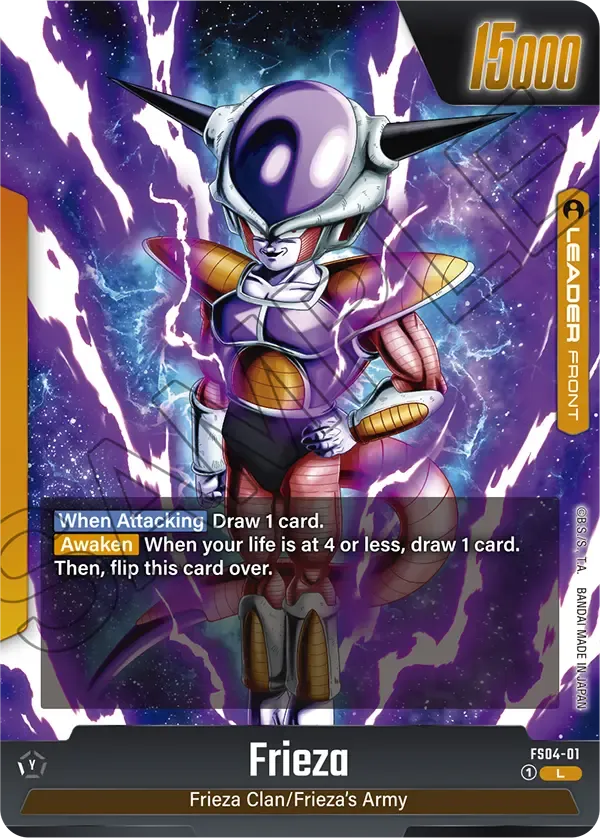
You don’t need to hand-assemble 50 cards from scratch. The fastest real path to a competitive-viable deck is buying a single-color starter deck as your chassis, then adding booster packs (or trading for singles) in that same color to upgrade the weakest slots first. BANDAI’s original four launch starters — FS01 Red Goku, FS02 Blue Vegeta, FS03 Green Broly, and FS04 Yellow Frieza — are the decks most commonly recommended by the community as a competitive starting point, since Blue in particular lines up with FB10’s Vegito strategy discussed above. Those four specific starters aren’t in this mall’s current stock, so if you want that exact chassis, check a US-based retailer or TCGplayer for them.
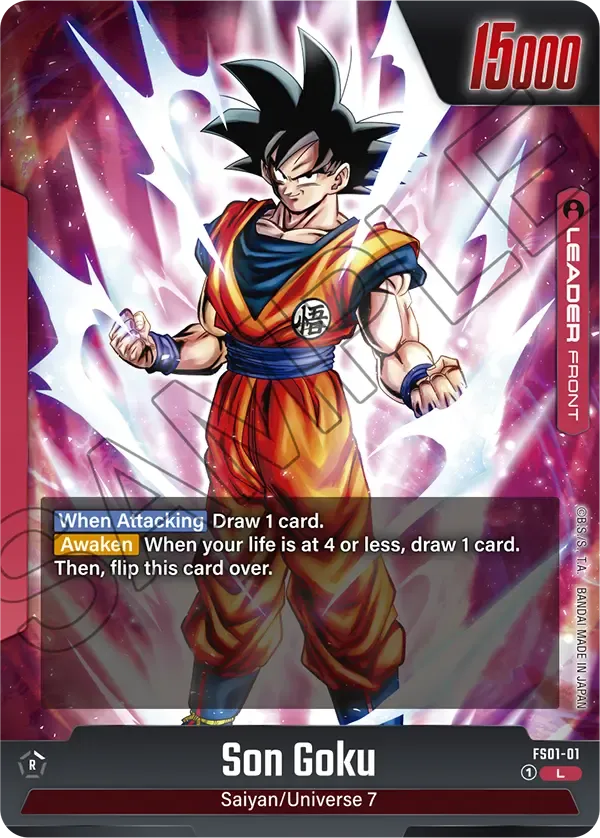
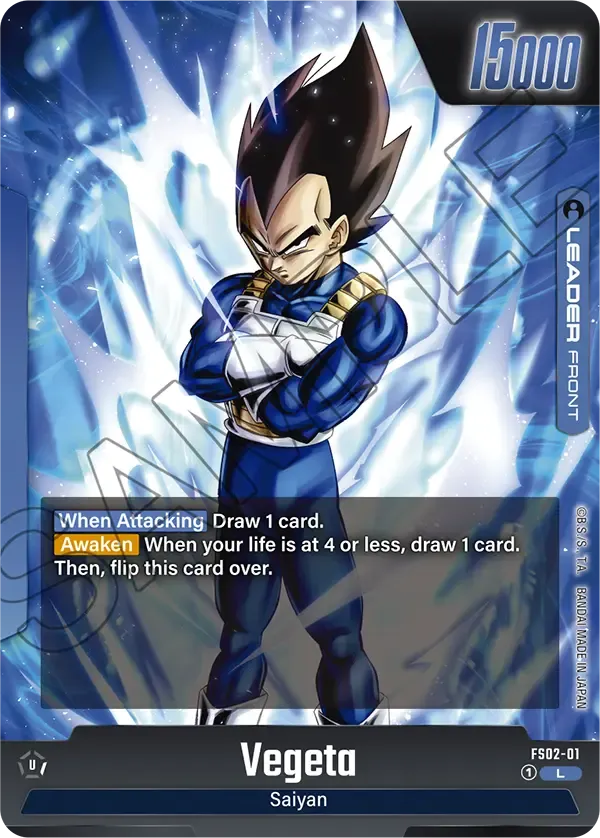
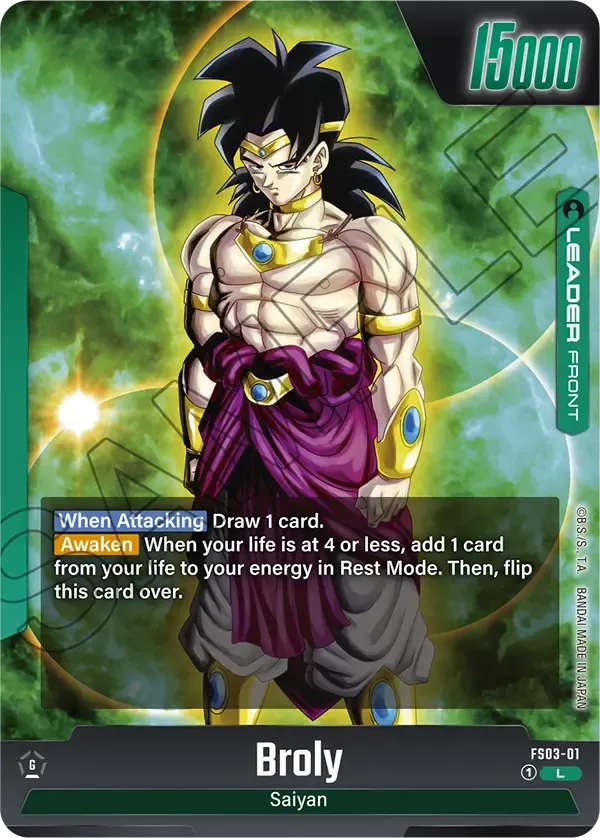
What Discovery Japan Mall does stock right now (as of August 2026) as legitimate Japanese-print Fusion World product:
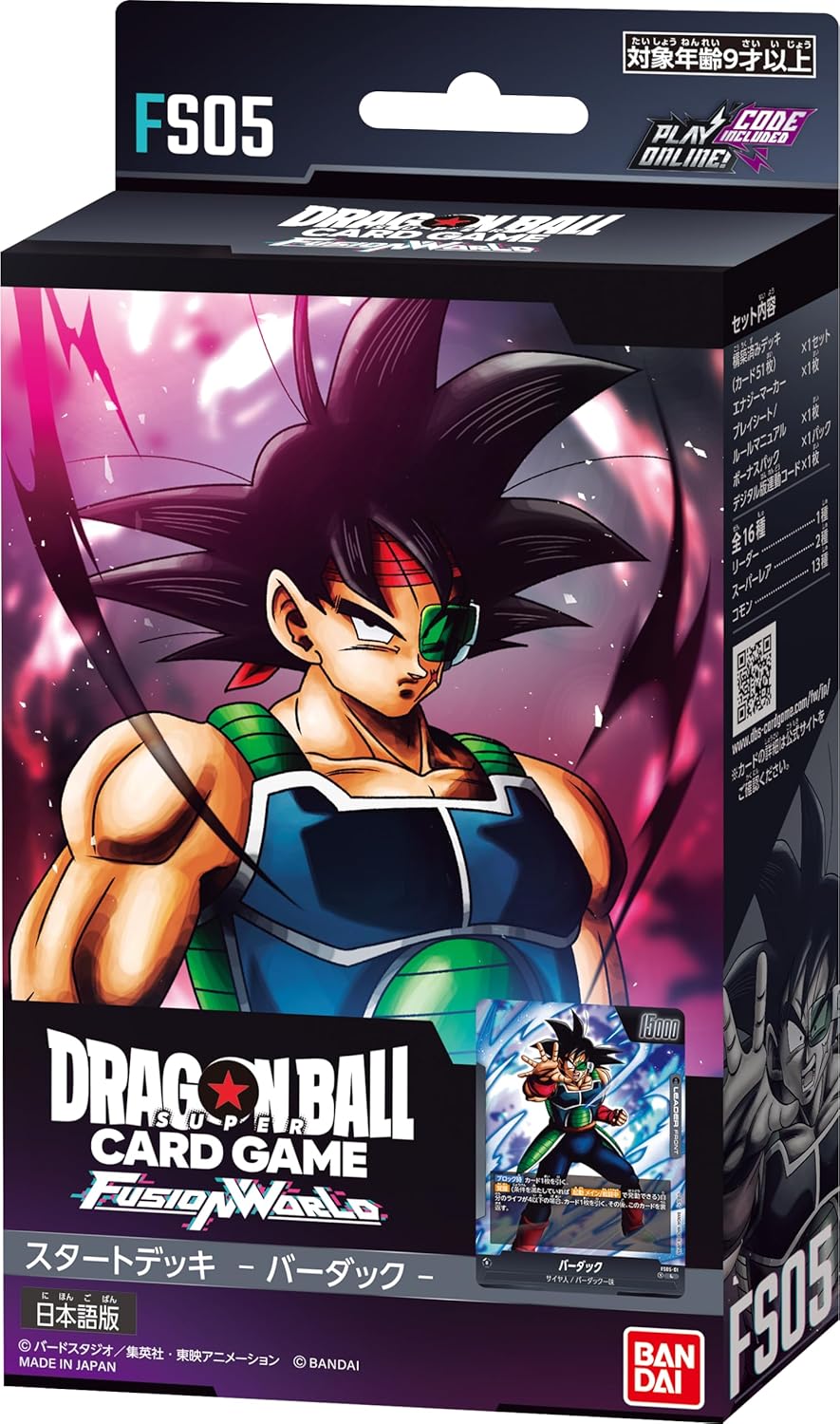
- Start Deck Bardock (FS05) — a full 51-card preconstructed deck, the cheapest way to get a real Leader and a coherent single-color plan in hand.

- Start Deck EX Shallot (FS09) and Start Deck EX Giblet (FS10) — later “EX” starters that each include four Super Rares built into the 51-card deck, giving you a stronger out-of-box power level for a bit more money.


- Start Deck EX Evolutionary State (FS11) — the most recent EX starter this mall carries, built around the Fusion Evolve mechanic that FB09 introduced and FB10 doubled down on with Vegito and Cell.

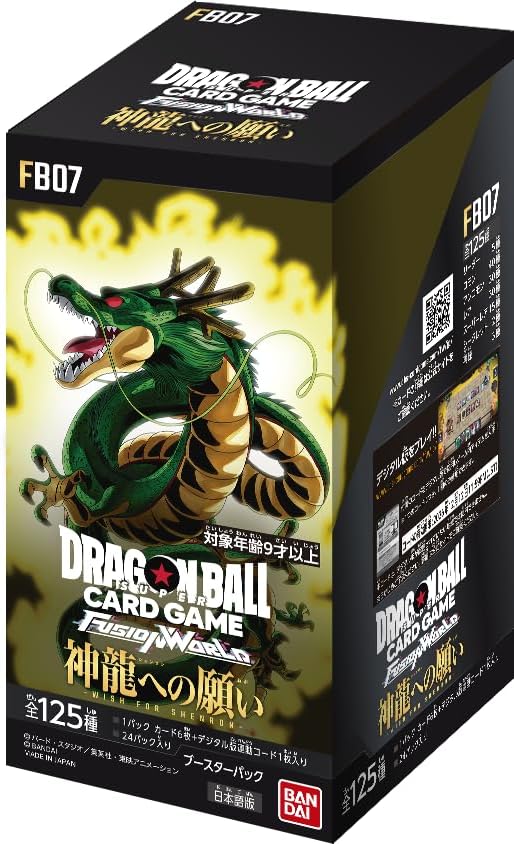
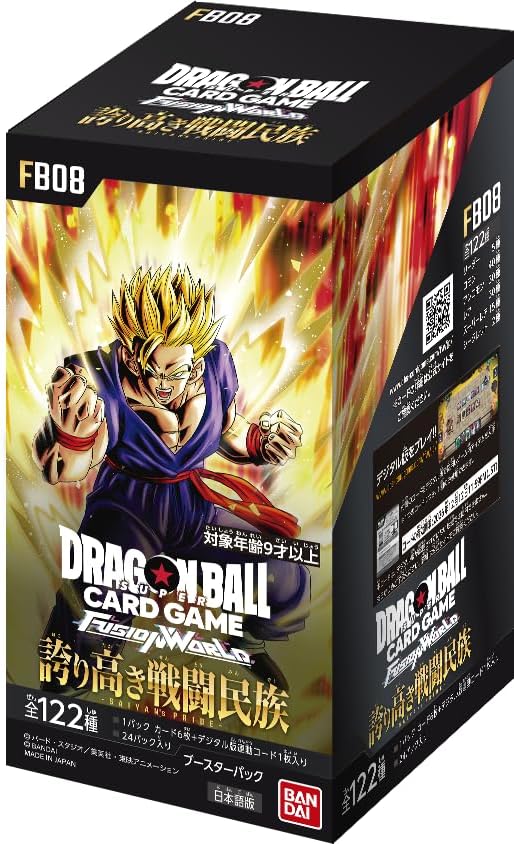
- Booster Pack Wish for Shenron (FB07) Booster Box, Booster Pack FB06 Booster Box (listed on this mall under its literal Japanese-to-English title “Looming Threat” — the official English name for FB06 is “Rivals Clash,” same set), and Booster Pack Saiyan’s Pride (FB08) Booster Box — these are your best route to filling out a curve with real 3-4 copy playsets rather than staying stuck at whatever your starter deck shipped with. FB08 is this mall’s newest stocked set and the closest to current standard-relevant power level.


Two honest caveats before you buy. First, this mall’s Fusion World stock currently tops out at FB08 — the two newest sets, FB09 “Dual Evolution” and FB10 “Cross Force” (the set behind the Vegito case study above), aren’t in inventory here as of this writing. If your goal is specifically to build the exact FB10 Vegito or Cell list, you’ll need to source those newer packs or singles from a US retailer or TCGplayer instead; this mall is a better fit for building a strong, currently-legal deck around FB05-FB08 staples than for chasing the newest chase cards. Second, everything above ships as genuine Japanese-print product — great for keeping costs down and for reading Power/Cost/Color icons (which are universal), but the actual Skill text will be in Japanese, so cross-reference BANDAI’s official card database in English if you need to read exact wording while building your list.
Comparison: What Each Product Actually Gets You
| Product | Type | Approx. Price (JPY, as of Aug 2026) | Best For |
|---|---|---|---|
| Start Deck Bardock (FS05) | 51-card starter | ~¥2,200 | Cheapest legal chassis to learn on |
| Start Deck EX Shallot (FS09) | 51-card starter, 4 SR included | ~¥8,900 | Stronger out-of-box power level |
| Start Deck EX Giblet (FS10) | 51-card starter, 4 SR included | ~¥5,500 | Mid-price EX starter |
| Start Deck EX Evolutionary State (FS11) | 51-card starter, Evolve-focused | ~¥3,900 | Newest EX chassis, Evolve mechanic |
| Rivals Clash Box (FB06, listed as “Looming Threat”) | 24-pack booster box | ~¥9,900 | Filling curve gaps, cheap singles pool |
| Wish for Shenron Box (FB07) | 24-pack booster box | ~¥15,900 | Newer staples, still standard-legal |
| Saiyan’s Pride Box (FB08) | 24-pack booster box | ~¥12,400 | Most current stock at this mall |
Prices shown are in Japanese yen before international shipping and fluctuate with this mall’s live inventory; treat them as a snapshot, not a quote. This isn’t financial advice — card and box prices for Fusion World move with every new set release and banlist update, so verify current pricing before you buy.
Frequently Asked Questions
How many cards should a competitive Fusion World deck run?
Most competitive lists run exactly 50 cards plus one Leader, even though the rules allow 50-60. Fewer cards means a higher chance of drawing your core pieces on time, which matters more than the small consistency boost from extra copies of situational cards.
Do I need to buy singles to build a competitive deck, or can boosters get me there?
Booster boxes give you a real shot at 3-4 copy playsets of common and uncommon staples, but chase Super Rares and Secret Rares (like FB10’s Vegito) are randomized low-odds pulls. Most competitive players mix booster-box openings with singles trades or purchases to finish a specific list rather than relying on box odds alone.
Is there a banlist I need to check before building a tournament deck?
Yes. Fusion World doesn’t run a rotating Standard format — every mainline set from FB01 onward remains tournament-legal — but BANDAI does maintain an active banned/restricted list updated a few times a year, most recently around July 2026. Always check the current list before finalizing a deck for an event; a card that was a format staple two sets ago can be sitting on that list today.
Can I mix Japanese-print and English-print cards in the same deck?
For casual play, yes — mixed-language tables are common since Power, Cost, and Color icons are universal. For sanctioned tournament play, check with your specific event’s organizer, since language-mixing policy can vary by region and format.
What’s the single biggest mistake new deck builders make?
Running too many expensive, standalone cards instead of committing to a curve that peaks at 2-4 energy. A deck full of individually powerful 5-6 cost cards will lose consistently to a deck that can actually do something on turns two and three, because Fusion World’s one-Energy-per-turn system punishes a top-heavy curve hard.
Takeaway
Building a competitive-viable Fusion World deck comes down to three disciplined choices: commit to one color instead of chasing favorite characters, build a curve that peaks at 2-4 energy with 3-4 copies of your real core pieces, and start from a starter deck chassis rather than 50 random singles. The Vegito FB10 case study shows what that looks like at a high level — an intentionally cheap, focused curve backed by a real tournament win — but the same framework applies whether you’re building Red aggro or Yellow control. Get the construction rules and curve right first; the specific chase cards can come later.
For a broader rules and buying overview before you dive into deck building, see our Dragon Ball Fusion World Beginner’s Guide (2026 Edition).
Related Articles
More Trading Card Game Guides
- How to Build a Competitive One Piece Card Game Deck (One Piece Card Game)
- How to Build Your First Standard Pokémon TCG Deck (Pokémon TCG)
- Is NARUTO CARD GAME Worth It for Competitive Players? (Naruto Card Game)
Comments