※本ページはプロモーションが含まれます
Disclosure: This post contains affiliate links. If you buy through them, we may earn a commission at no additional cost to you. Learn more.
As of August 19, 2026, the Dragon Ball Super Card Game Fusion World banlist is short: three banned cards and five restricted cards, and the most recent update actually removed a restriction rather than adding one. If you’re building a deck and want the one-line answer — you cannot play FB01-005 Master Roshi, FB01-056 Pilaf, or FB02-031 Ribrianne at all, and you’re limited to a single copy of FB04-085 Babidi, both FB04-094 and FB04-095 Majin Buu: Kid, SB01-011 Cell, and SB01-015 Self-Destruct.
Fusion World has no set rotation, so this list is the only thing that takes cards out of the format. That makes it worth understanding properly, not just skimming. Below is the current list, the full history of every change BANDAI has made since the game launched in February 2024, the reasoning BANDAI published for each hit, and the separate errata list that quietly changes how several cards actually work.
- The Current Banlist at a Glance (August 19, 2026)
- Why Each Card Got Hit — In BANDAI’s Own Words
- The Card That Came Back: Kefla (FB02-013)
- Is There a Schedule? Reading BANDAI’s Timing
- Errata Is a Separate List (and It Also Binds You)
- What the Banlist Means If You’re Buying
- Where to Buy Sets Affected by the Banlist
- Do I Actually Have to Check This Before a Local Tournament?
- Frequently Asked Questions
- Takeaway
- Related Articles
- More Trading Card Game Guides
The Current Banlist at a Glance (August 19, 2026)
| Card | Number | Set | Status | Effective |
|---|---|---|---|---|
| Master Roshi | FB01-005 | FB01 Awakened Pulse | Banned (0 copies) | July 1, 2024 |
| Ribrianne | FB02-031 | FB02 Blazing Aura | Banned (0 copies) | July 1, 2024 |
| Pilaf | FB01-056 | FB01 Awakened Pulse | Banned (0 copies) | July 1, 2025 |
| Babidi | FB04-085 | FB04 Ultra Limit | Restricted (1 copy) | July 1, 2025 |
| Majin Buu: Kid | FB04-094 | FB04 Ultra Limit | Restricted (1 copy) | Dec. 12, 2025 |
| Majin Buu: Kid | FB04-095 | FB04 Ultra Limit | Restricted (1 copy) | Dec. 12, 2025 |
| Cell | SB01-011 | SB01 Manga Booster 01 | Restricted (1 copy) | Dec. 12, 2025 |
| Self-Destruct | SB01-015 | SB01 Manga Booster 01 | Restricted (1 copy) | Dec. 12, 2025 |
| ~~Kefla~~ | ~~FB02-013~~ | FB02 Blazing Aura | Unrestricted — freed | March 14, 2026 |
Two rules from BANDAI’s official Fusion World tournament rules that people get wrong constantly:
- The default deck limit is up to 4 copies of a card with the same card number. “Banned” means zero copies; “Restricted” means exactly one.
- “Cards with the same card number and different illustrations are still considered the same card.” Your $200 alt-art Ribrianne is banned exactly as hard as the common version. Rarity and artwork buy you nothing here.
Source: Dragon Ball Super Card Game Fusion World official rules and the current Banned/Restricted Cards list.
Why Each Card Got Hit — In BANDAI’s Own Words
BANDAI is unusually transparent here compared to some other TCG publishers: every Fusion World banlist announcement includes a per-card explanation. That’s useful, because the reason tells you whether a card is likely to stay dead or eventually come back.
The July 2024 Wave: Master Roshi and Ribrianne
Announced June 20, 2024; effective July 1, 2024 (tabletop) and July 11, 2024 (digital).
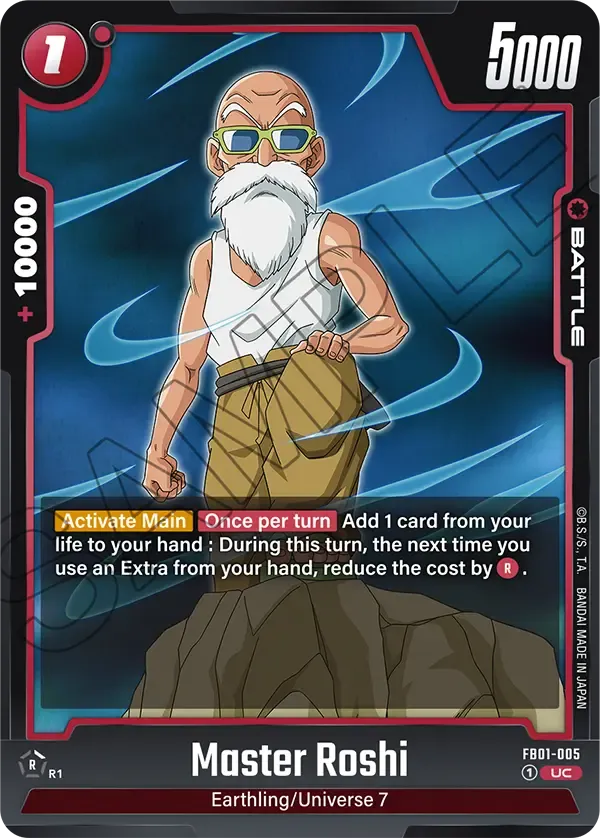
FB01-005 Master Roshi (banned). BANDAI’s stated problem was that Roshi let players “adjust their life cards, making it easier to control the Awakening timing,” and stacked with cost reduction to make Red decks dominant. Awakening is Fusion World’s core comeback mechanic — being able to schedule it on your terms rather than the game’s was the whole issue.

FB02-031 Ribrianne (banned). With FB02-001 Son Goku as leader, Ribrianne cost 1 and gained Double Strike, which BANDAI said “greatly decreases the chances to win” for the opponent. Note that this is a combo ban, not a raw-power ban: the card is only broken alongside one specific leader.
The July 2025 Wave: Pilaf and Babidi
Announced June 12, 2025; effective July 1, 2025 (tabletop) and July 3, 2025 (digital).
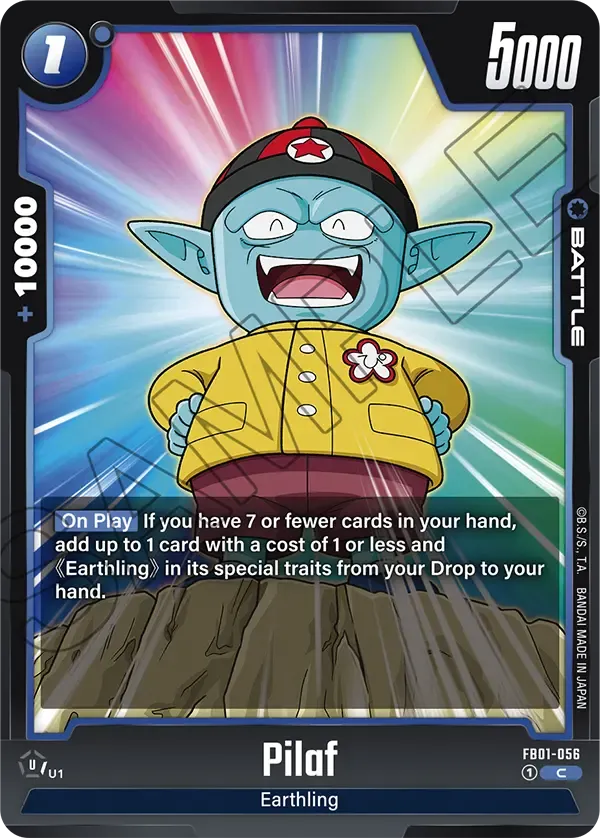
FB01-056 Pilaf (banned). BANDAI described Pilaf as “used very frequently in blue decks” with no real deck-building cost, and said the “combo power by recovering cards with the same name” led to “excessive card manipulation” and prolonged matches. Match length is a real tournament concern in a game with timed rounds, not just a flavor complaint.

FB04-085 Babidi (restricted). Alongside《Majin》trait cards, Babidi could be played for zero cost and lock in KO targets, and his hand-destruction effect was “particularly powerful against decks that tend to have few cards in their hand.” That’s a matchup-polarization ban — the card wasn’t beating everyone, it was un-winnable for a subset of decks.
The December 2025 Wave: The Buu and Cell Correction
Announced November 24, 2025; effective December 12, 2025 (tabletop) and with the Ver. 10.0.0 digital update. No bans, four restrictions.
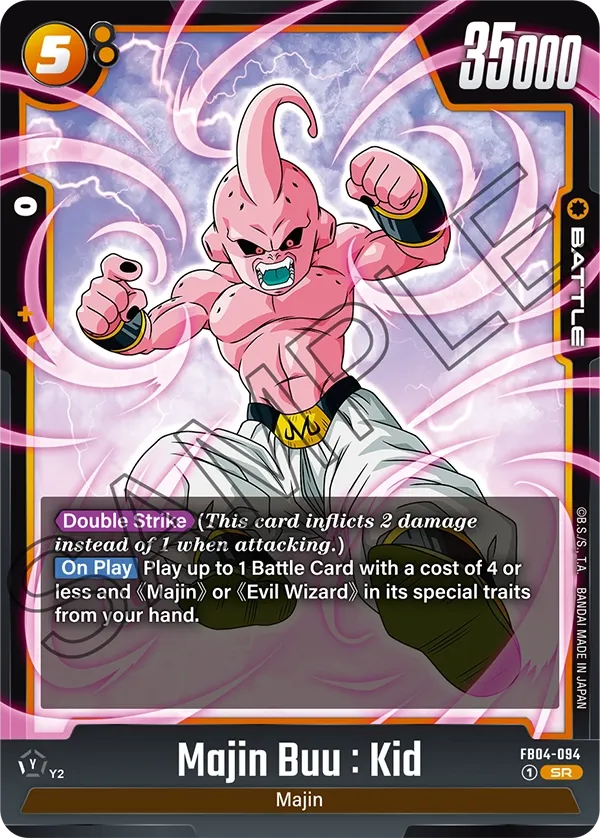

FB04-094 and FB04-095 Majin Buu: Kid (restricted). BANDAI said FB04-094 “allowed players to achieve victory far more efficiently compared to other cost-5 cards,” while FB04-095 “significantly boosted the number and efficiency of attacks in the mid-to-late game” for both the FB04-077 Majin Buu: Evil deck and the SB01-029 Majin Buu: Evil / Majin Buu: Kid deck.


SB01-011 Cell and SB01-015 Self-Destruct (restricted). The Cell hits are the most interesting of the bunch because BANDAI didn’t say the deck was winning too much — it said Cell “greatly increased the repetitive nature” of the deck’s gameplay, producing “fixed actions every turn,” and restricted it specifically “to increase the variety of possible plays.” Self-Destruct was flagged as “extremely powerful” removal “at a low cost while conserving one’s hand.”
That’s a design-philosophy restriction rather than a win-rate restriction, and it’s worth knowing if you’re the kind of player who assumes a deck is safe from the banlist just because its top-cut numbers look reasonable.
The Card That Came Back: Kefla (FB02-013)
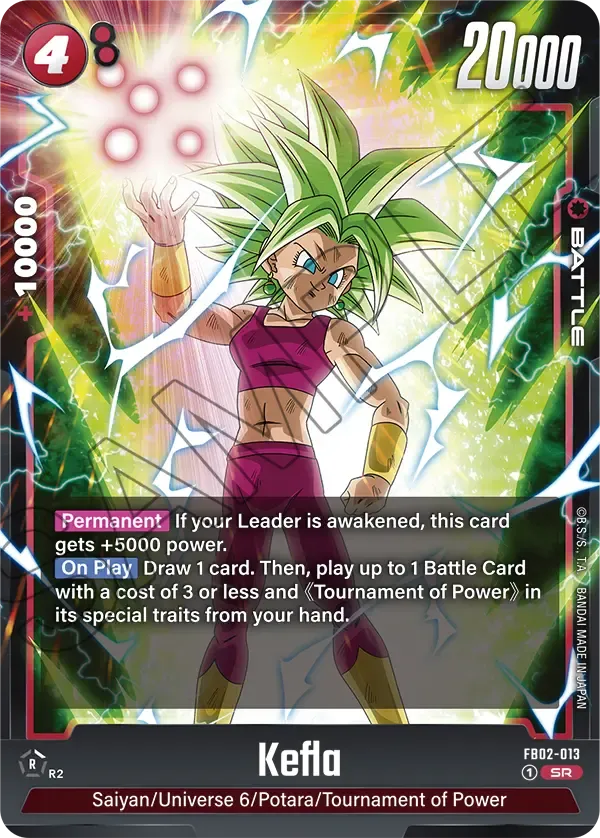
Kefla is the only card in Fusion World’s history to be released from the banlist. She was restricted in the very first wave (June 20, 2024) for repeated plays with FB02-001 Son Goku’s leader skill that produced “one-sided battles.”
In the announcement dated March 9, 2026, BANDAI lifted the restriction effective March 14, 2026 (tabletop) and the Ver. 11.0.0 digital update, saying that while the card “remains powerful,” it no longer exceeds the game’s balance parameters — power creep from later sets, particularly after DUAL EVOLUTION [FB09], had caught up to her.
The practical takeaway: power creep un-bans cards in Fusion World. If you own restricted cards, don’t dump them on the assumption they’re permanently dead — but equally, don’t buy playsets of restricted cards speculating on an unban, because in two and a half years exactly one card has come back.
Is There a Schedule? Reading BANDAI’s Timing
There’s no published banlist calendar, but the pattern in the data is hard to miss:
| Update | Announced | Effective (TCG) | Lines up with |
|---|---|---|---|
| Wave 1 | June 20, 2024 | July 1, 2024 | — |
| Wave 2 | June 12, 2025 | July 1, 2025 | — |
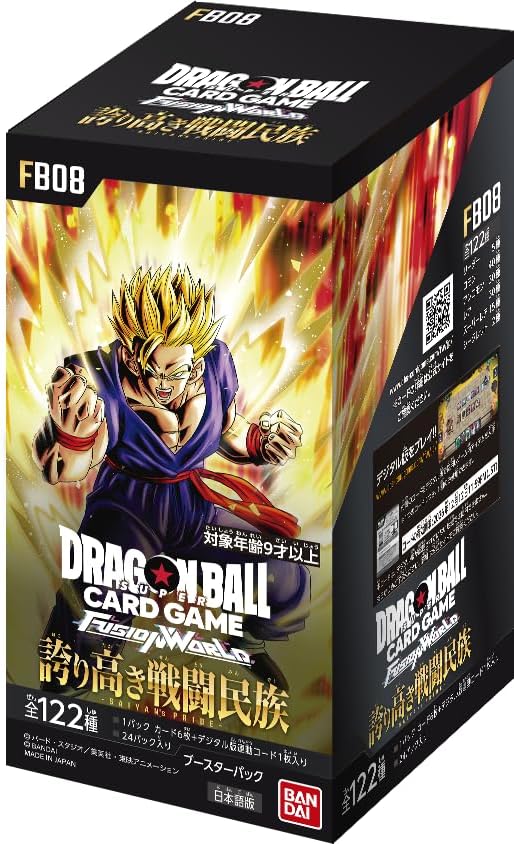
| Wave 3 | Nov. 24, 2025 | Dec. 12, 2025 | FB08 SAIYAN’s PRIDE release day |
| Wave 4 | March 9, 2026 | March 14, 2026 | Day after FB09 + FS11/FS12 (March 13, 2026) |
The two most recent updates landed exactly on new-set release days, and both gave roughly two to three weeks of notice. The two earlier ones both landed July 1. That’s suggestive, not a promise — BANDAI has never committed to an update cadence, and it explicitly says the list “may be removed and the list updated when the game environment changes.”
If the pattern holds, the next realistic window is around BRIGHTNESS OF HOPE [FB11] on October 16, 2026, with an announcement in late September or early October. As of August 19, 2026, no update has been announced since March. Check the official site before any event rather than trusting a third-party list, including this one — an outdated banlist article is exactly how people get game losses at deck check.
Errata Is a Separate List (and It Also Binds You)
A card can be fully legal and still not do what the printed text says. BANDAI maintains a separate errata list where the corrected text “takes precedence over the original wording of the card” in all formats. Fusion World’s English release has needed this more than you’d hope, almost entirely from Japanese-to-English mistranslations:
| Card | Number | Errata date | What changed |
|---|---|---|---|
| Son Goku | FB01-046 | Feb. 5, 2024 | “Choose up to 1” corrected to a mandatory “Choose 1 of your Battle Cards” |
| Multiple《Demon Realm》cards | FB06-071, FB06-073–094, FB06-097 | April 11, 2025 | Now read “《Demon Realm》or《Demon World》”; trait recognition was broken |
| Majin Buu: Kid | SB01-039 | June 13, 2025 | Targeting clarified to all opponent energy and all cards costing 5 or less in the Battle Area |
| Giblet | FS10-01 | June 18, 2025 | Clarified “add up to 2 Battle Cards from your Drop to your energy” and placement |
| Son Gohan: Childhood | FP-088 | May 29, 2026 | Traits corrected to《Saiyan/Earthling/Master’s Teachings》 |
The FS10 Giblet errata is the cautionary one: BANDAI publicly stated that FS10 cards were only usable in official tournaments held from June 20 onward, meaning a mistranslation temporarily made a retail starter deck event-illegal. If you buy sealed English product on release week, check the news page before you sleeve it up.
What the Banlist Means If You’re Buying
This is where the banlist stops being trivia and starts costing money.
Banned singles are not worthless, but they’re collector items, not deck pieces. Alt-art Ribrianne and Master Roshi still have display and set-completion demand. What they no longer have is player demand, which is the demand that supports most Fusion World single prices. Card prices move fast and this isn’t financial advice — but a card with a permanent zero-copy limit has lost its largest buyer pool, and you should price it accordingly rather than anchoring on what it sold for pre-ban.
Restricted cards are the genuinely awkward case. If you own four SB01-011 Cell, three of them are now surplus, and every other Cell player in the world is in the same position — which is exactly when supply outruns demand. The upside is that a single copy is still a copy people need, so the floor holds better than a full ban.
Sealed product is the banlist-proof purchase. A sealed box’s value is driven by the whole set’s chase cards, print status, and collector demand, not by whether one card in it got restricted. That’s the main structural argument for buying sealed rather than chasing individual meta staples — a point covered in more depth in our Fusion World booster box vs. starter deck breakdown and the chase card price history.
Where to Buy Sets Affected by the Banlist
If you want the actual cards discussed above, the two sets that matter are FB02 and SB01. Both are Japanese-language product, which plays identically but reads differently — see our Japanese vs. English comparison for the practical differences. Prices below are as listed on August 19, 2026 and change frequently.
FB02 — Home of Ribrianne (banned) and Kefla (freed)
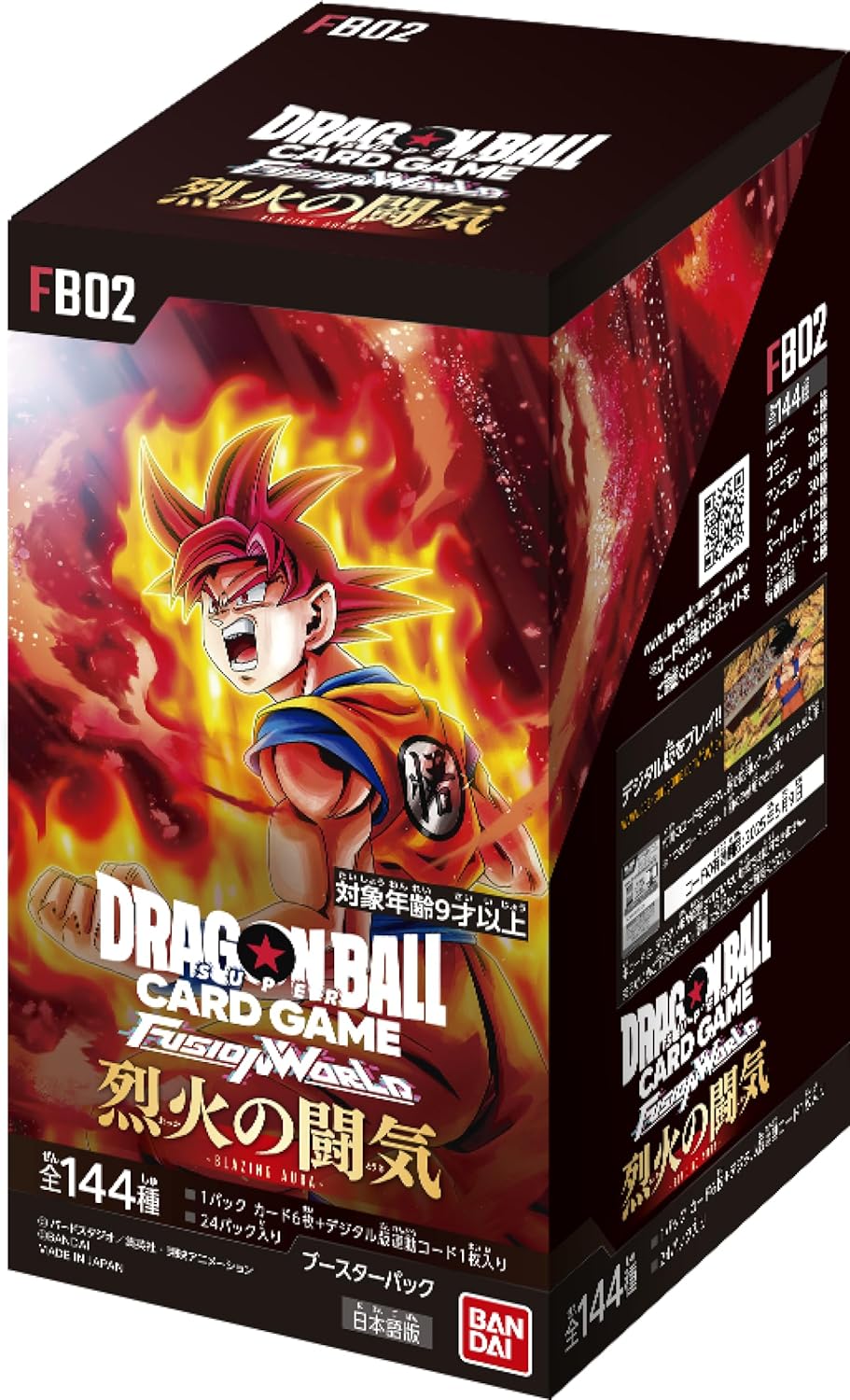
BANDAI Dragon Ball Super Card Game Fusion World Booster Pack Fiery Fighting Spirit (FB02) (BOX) 24 Packs — 9,895 JPY

This is FB02, sold under its Japanese title (the English release is BLAZING AURA). It’s the most banlist-scarred set in the game: Ribrianne is a permanent zero, and FB02-001 Son Goku — the leader that made both Ribrianne and Kefla broken — is here too. The downside is real: you’re buying into a May 2024 set whose most famous card is unplayable, and the Kefla unban is priced in by now rather than being a hidden bargain. Buy this for the set itself, not as a banlist play.
SB01 Manga Booster 01 — Two Restricted Cards, One Very High Price
BANDAI Dragon Ball Super Card Game Fusion World MANGA BOOSTER 01 (SB01) (BOX) 24 Packs — 50,691 JPY

SB01 holds both restricted Cell-deck pieces, plus the Majin Buu: Kid whose text needed a June 2025 errata. The caveat here is the price, not the banlist: at over 50,000 JPY this is comfortably the most expensive Fusion World box on the shelf, and it’s a manga-art collector set first and a playable set second. If your goal is competitive cards per yen, this is the worst possible choice; if your goal is Toriyama manga alt-arts, nothing else substitutes.
Banlist-Free Alternatives
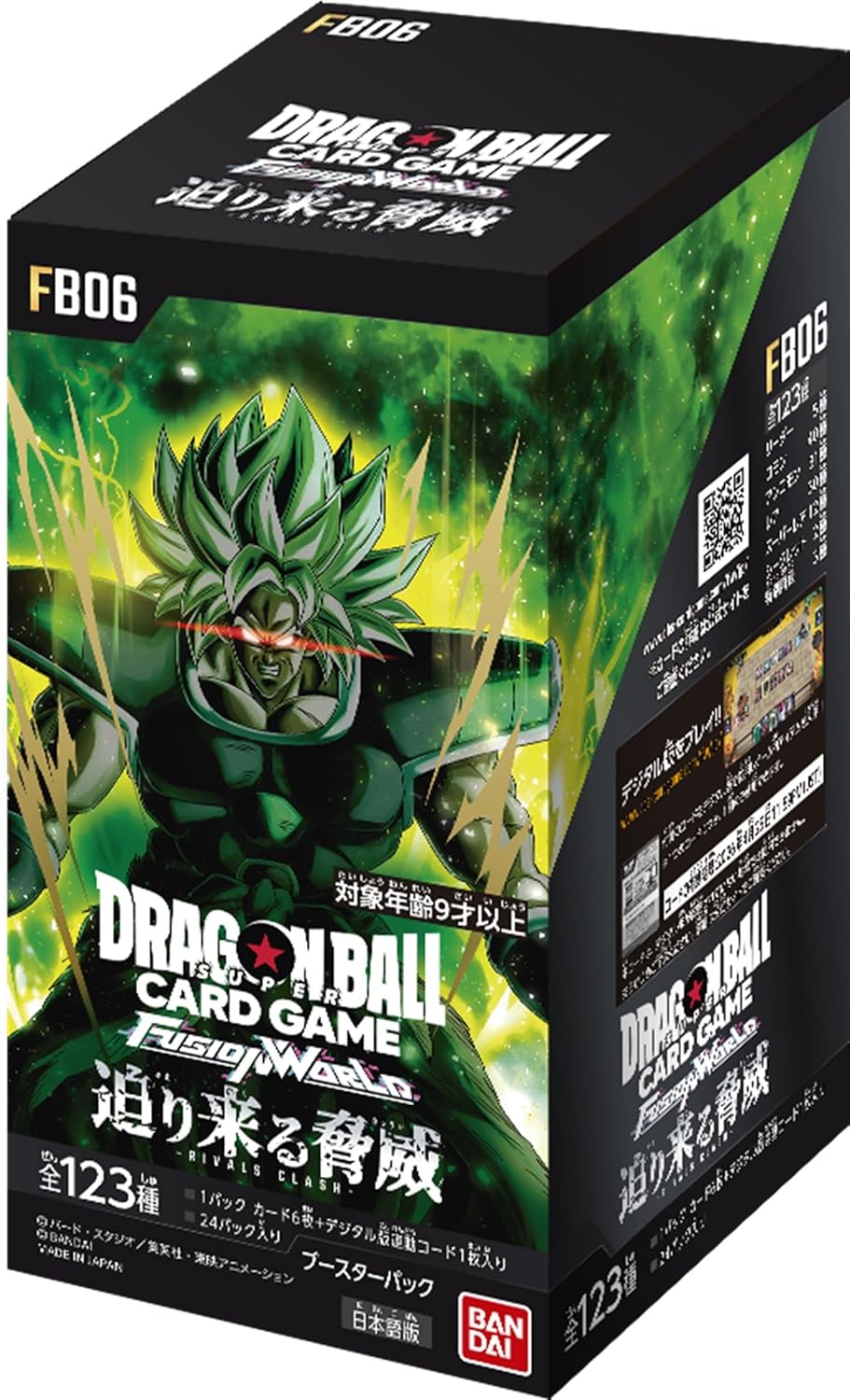
If you’d rather not think about any of this, FB05 and FB06 currently have zero cards on the banned or restricted list.
BANDAI Dragon Ball Super Card Game Fusion World Booster Pack Looming Threat (FB06) (BOX) 24 Packs — 9,895 JPY

BANDAI Dragon Ball Super Card Game Fusion World Booster Pack Unknown Adventure (FB05) (BOX) 24 Packs — 12,152 JPY

The honest caveat on both: “no banned cards” is not the same as “good.” FB05 and FB06 are 2025 sets sitting behind FB09 and FB10 in the current meta, and FB06 in particular is the set whose《Demon Realm》cards needed a mass errata. A clean banlist record is a nice-to-have, not a reason to buy. For what’s actually winning right now, see the current leader tier list.
Do I Actually Have to Check This Before a Local Tournament?
Yes — and it’s cheaper to check than to find out at deck registration. Official BANDAI Organized Play events require a Bandai TCG+ account, and Championship-level events require a fully written or printed deck list with no shorthand. A banned card in a submitted list is a deck problem before you’ve played a game.
For a casual store event the judge will usually just make you swap the card, but “usually” isn’t a rule. The list is one page on the official site and it has changed four times in two and a half years — a 30-second check the morning of the event is the whole cost of never having this problem.
Frequently Asked Questions
Does Fusion World have set rotation on top of the banlist?
No. Every Fusion World set from FB01 onward is still tournament-legal, including the SB Manga Boosters and FS/ST decks. The banned and restricted list is the only mechanism that removes cards from the format, which is why it carries more weight here than in a rotating game like Pokémon TCG Standard.
Do the tabletop and digital versions of Fusion World share the same banlist?
The same cards, but not always on the same day. BANDAI applies tabletop changes on a fixed calendar date and digital changes alongside an app version update — the December 2025 wave hit tabletop on December 12 and digital with Ver. 10.0.0, and the March 2026 change hit tabletop March 14 and digital with Ver. 11.0.0. Expect a short window where the two formats differ.
Is the banlist the same for Japanese and English cards?
Yes. The list is keyed to card numbers such as FB04-085, and a card number is identical across languages, artworks, and rarities. Buying the Japanese printing doesn’t get you around a restriction, and neither does buying the alt-art.
Can a banned card ever come back?
It’s happened once. FB02-013 Kefla was restricted in June 2024 and fully released in March 2026 after BANDAI decided later sets had caught up to her power level. No fully banned card has ever returned, so treat unban speculation as a long shot rather than an investment thesis. Card values fluctuate and nothing here is financial advice.
Where’s the safest place to buy the sets these cards come from?
Sealed product from a retailer that clearly sources authentic BANDAI stock is far lower-risk than loose singles from unknown marketplace sellers, since counterfeit Fusion World singles — especially high-value alt-arts — are a genuine problem. Our guide to buying Fusion World cards safely walks through the physical checks and seller red flags in detail.
Takeaway
Fusion World’s banlist is deliberately light-touch: eight cards restricted or removed across two and a half years, one card released back into the format, and per-card public reasoning every time. That’s a healthier signal than it might look — BANDAI is correcting specific combos and repetitive gameplay patterns rather than swinging at whole archetypes.
For players, the job is simple: bookmark the official list and the errata page, and check both before any event. For collectors, the useful lesson is that a ban removes a card’s largest buyer pool without removing its display value, and that power creep can quietly bring restricted cards back — so a restricted card is a bad thing to panic-sell and a worse thing to stockpile.
Prices and banlist status stated as of August 19, 2026. Card prices fluctuate and the competitive environment shifts; nothing in this article is financial advice.
Related Articles
- Dragon Ball Super Card Game: Original vs. Fusion World
- Dragon Ball Fusion World Beginner’s Guide (2026 Edition)
- How to Buy Dragon Ball Fusion World Cards Safely (2026)
More Trading Card Game Guides
- One Piece Card Game Ban List 2026: Every Banned Card (One Piece Card Game)
- Every Naruto Card Game Ever Made: The Full Timeline (Naruto Card Game)
Comments